Amplify-Now

AI Won’t Replace the Transformation Office — It Will Make It More Critical Than Ever

Summary


AI is accelerating execution—but speed alone doesn’t create value.

  • Faster execution increases the risk of misalignment
  • More activity doesn’t guarantee better outcomes
  • Transformation remains a system-level challenge
  • The Transformation Office becomes more structural, not less
  • Execution architecture is the missing layer connecting strategy to value

Is Accelerating Execution. But Is it Creating Lasting Value?

AI is already reshaping how transformation is executed across the enterprise. Activities that once required significant manual effort—such as analysis, reporting, and forecasting—are becoming faster, more automated, and increasingly continuous. As a result, the cost and effort associated with execution are falling, and organizations are able to move with greater speed and responsiveness than before.

However, this shift does not reduce the need for transformation discipline. In practice, it increases the pressure on organizations to ensure that execution translates into measurable outcomes. As the pace of activity rises, so too does the likelihood that effort becomes disconnected from value, with more initiatives in motion but less clarity on whether they are collectively delivering the intended impact.

Execution can now move faster than ever, but speed alone is not the objective. The challenge is ensuring that execution remains aligned, coordinated, and ultimately tied to value creation.

Transformation Has Always Been a System Challenge

In most organizations, the barrier to successful transformation has rarely been a lack of insight. Leadership teams are generally clear on where costs need to be optimized, which growth initiatives matter, and what value should be delivered over time. The strategic intent is often well understood.

Yet outcomes still fall short of expectations.

This gap exists because transformation is not delivered through isolated initiatives. It is delivered through a system of execution that connects priorities, aligns resources, and governs how decisions are made across the enterprise. When that system lacks structure, breakdowns occur in ownership, prioritization, and coordination, often long before they are visible in reporting or financial outcomes.

AI improves the quality and speed of insight, but it does not resolve how that insight is translated into coordinated action across a complex organization. That challenge remains fundamentally structural.

Speed Introduces a New Form of Risk

One of the most significant shifts AI introduces is the acceleration of execution across multiple fronts simultaneously. Organizations can initiate more work, generate more signals, and respond to changes with increasing speed, often across multiple programs and functions at once.

This creates a different kind of risk—one that is less about inactivity and more about misalignment.

As the volume and velocity of activity increase, maintaining alignment becomes more complex. Priorities can shift faster than they are governed, dependencies can be overlooked as initiatives evolve, and resources can be distributed across competing efforts without clear trade-offs being enforced. Over time, this leads to a dilution of focus, where a high level of activity masks a lack of coherent progress.

Sustaining alignment at speed requires more than faster tools. It requires a defined structure for how execution is coordinated, governed, and continuously adjusted across the enterprise.

AI Is Challenging the SaaS Model — But Not All Software Is Equal

There is growing discussion that AI will fundamentally reshape the SaaS landscape. As AI becomes more capable, the way users interact with software is already changing, with less reliance on traditional interfaces and more emphasis on AI-driven workflows. In this model, certain application layers become less distinct, and some may become interchangeable or redundant over time.

There is validity in this perspective. AI is reducing the need for software that primarily exists to capture, retrieve, or summarize information, particularly where those tasks can be handled more efficiently through intelligent agents.

However, this view assumes that all software serves the same purpose, which is not the case.

Some software exists to facilitate individual tasks. Other software exists to structure how the enterprise operates as a system. The distinction between these roles is increasingly important.

Transformation is not a collection of independent tasks. It is a coordinated system of decisions, dependencies, governance, and value realization that spans the enterprise. As AI accelerates individual activities, the need for a system that maintains alignment, enforces accountability, and connects execution to value becomes more critical. This is the layer that enables organizations to translate activity into outcomes, and it is not something AI replaces. It is something AI depends on.

The Transformation Office Becomes Structural

In this context, the role of the Transformation Office continues to evolve. It is no longer limited to coordinating programs or tracking progress. Its role is increasingly centered on defining how execution operates as a system across the organization.

This includes establishing how strategy is translated into portfolios, how priorities are evaluated and rebalanced, how governance is embedded into decision-making, and how value is tracked and validated over time. These are not administrative tasks, but structural elements that determine how effectively an organization can deliver change at scale.

As execution accelerates, the need for this structure becomes more pronounced. The Transformation Office becomes the mechanism through which alignment is maintained, decisions are governed, and outcomes are realized in a consistent and repeatable way.

Why AI Cannot Replace This Role

AI plays an important role in improving how decisions are informed, particularly by increasing visibility, surfacing risks, and enabling faster analysis. However, the responsibilities associated with transformation extend beyond insight and recommendation.

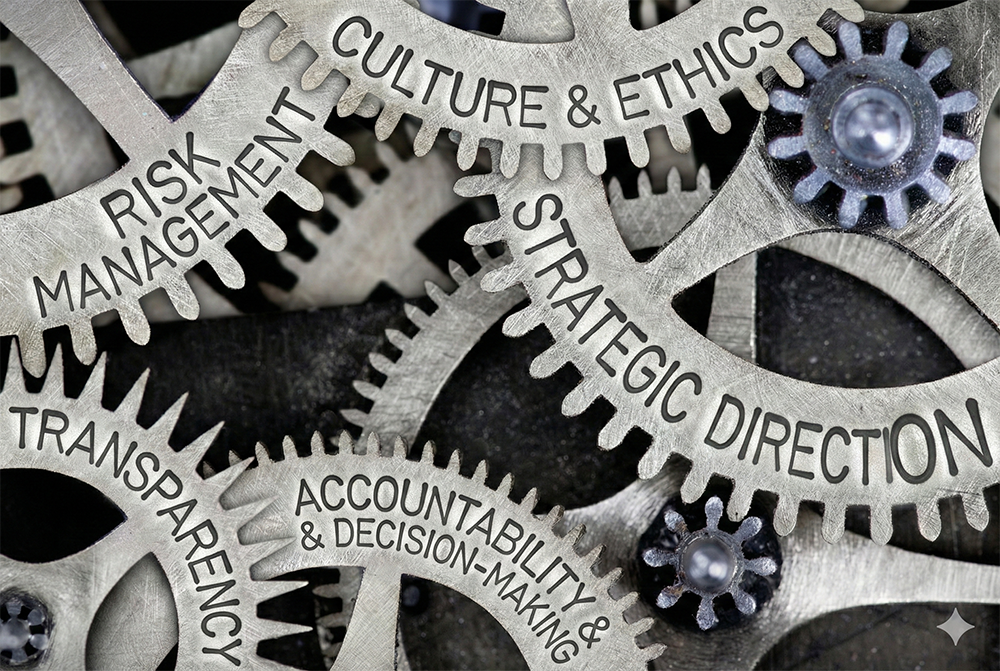
Decisions within transformation programs carry financial and strategic consequences. They involve trade-offs between competing priorities, the allocation of limited resources, and the accountability of leaders for delivering outcomes. These decisions are shaped at the C-suite level, where priorities across functions must be aligned, risks evaluated, and trade-offs actively managed in the context of broader organizational objectives.

Ensuring alignment at this level requires structure, governance, and clearly defined accountability across the leadership team.

At the same time, transformation depends on a consistent and reliable view of execution across the enterprise. Without a structured system that connects initiatives, benefits, and dependencies, data becomes fragmented and difficult to reconcile, reducing confidence in reporting and slowing decision-making.

AI can support visibility and highlight emerging risks, but ensuring that risks are addressed, priorities are enforced, and value is realized requires a system designed for execution.

The Missing Layer: Execution Architecture

What this shift makes increasingly clear is that many organizations are operating without a defined execution layer. While strategy may be clearly articulated and delivery tools are widely used, the structure that connects these elements into a coherent system is often missing.

Execution architecture addresses this gap. It provides the structural integration required for enterprise strategy execution and value creation by defining how strategic intent is translated into portfolios of work, how governance and funding decisions are applied, how delivery is coordinated across functions, and how value is measured and realized over time.

By bringing these elements together into a single operating layer, execution architecture enables consistent, enterprise-wide execution. As organizations adopt AI more broadly, the importance of this layer becomes increasingly visible. AI increases the speed at which execution can occur, but execution architecture determines whether that speed contributes to meaningful value creation.

Where Amplify Sits

Organizations that recognize this shift are focusing on how execution is structured, rather than simply how it is accelerated.

This is where Amplify sits.

Amplify is the execution architecture for enterprise strategy execution and value creation. It brings together strategic alignment, portfolio structure and accountability, governance and funding control, cross-functional delivery coordination, and value realization and performance insight into a single operating layer.

By providing this structure, Amplify enables organizations to connect priorities, embed governance, and maintain visibility across the transformation portfolio. It creates a shared system of truth in which decisions are informed, aligned, and accountable, allowing execution to be managed consistently at an enterprise level.

In this role, Amplify is not an additional tool within the stack, but the layer through which execution is defined and sustained.

The Shift That Matters

Organizations that succeed in this environment will be those that can integrate AI into a coherent system of execution. They will be able to maintain alignment as the pace of change increases, govern decisions with clarity, and ensure that value is continuously tracked and realized.

AI expands what is possible in transformation, but outcomes are ultimately determined by how effectively execution is structured and managed.

Final Thought

AI changes how fast organizations can execute.
C-suite alignment and execution architecture determine whether that speed delivers value.

Explore how leading organizations are structuring execution to deliver measurable transformation outcomes.
Enterprise Transformation Maturity Report

Or read the first blog in our Enterprise Transformation & AI series: AI Won’t Eliminate Transformation — But It Will Change How Its Done

What We Learned from Enterprise Transformation Leaders — And Why It Changes How Value Is Delivered 

Summary


Enterprise transformation is no longer delivered through discrete programs. It is becoming a continuous, enterprise-wide capability.

New research with transformation leaders reveals four structural shifts:

  • Transformation is becoming a continuous operating model
  • Portfolio scale is outpacing execution capability
  • Value is the objective—but not yet systematically delivered
  • Execution is now the limiting factor

Organizations that succeed are not just managing transformation—they are building the capability to deliver value continuously.

Enterprise transformation has evolved.

Organizations can no longer deliver change through a series of discrete programs. Instead, they are managing multiple, overlapping initiatives— cost optimization, organic and inorganic growth, operational improvements, innovation — concurrently and continuously.

In this context, transformation can no longer be executed periodically. It needs to be a continuous capability for delivering value across the enterprise.

This is the shift at the center of what we describe as Transformation 4.0 — where execution evolves from a series of initiatives into a core enterprise capability for value creation.

The Enterprise Transformation Maturity Report 2026

To understand how organizations are responding to this shift in practice, we commissioned independent research to interview transformation leaders responsible for executing enterprise-scale change inside large global organizations.

These are individuals operating at the center of execution — managing complex portfolios, coordinating cross-functional delivery, and accountable for delivering measurable outcomes in dynamic environments.

The findings are presented in the Enterprise Transformation Maturity Report 2026. What emerges is not a set of isolated challenges, but a clear pattern of structural change.

This shift is best understood through the lens of execution maturity — as the progression of how effectively an organization connects strategy, execution, and value over time.

Transformation Is Shifting to a Continuous Operating Model

One of the most significant changes is the breakdown of transformation as a clearly defined phase.

Organizations are no longer moving cleanly from strategy to execution and then returning to business-as-usual. Instead, they are operating in a state where multiple forms of change are happening concurrently and continuously. Cost optimization, growth initiatives, operational improvement, and innovation are no longer sequenced — they are interdependent and ongoing.

Transformation, therefore, is no longer something that is initiated and completed. It is becoming embedded within the operating model of the organization itself.

Portfolio Scale Has Increased Faster Than Execution Capability

At the same time, the scale and complexity of transformation portfolios have expanded significantly.

Most organizations are now managing large numbers of initiatives across multiple programs and workstreams, often spanning functions, geographies, and strategic objectives. Investment levels are substantial, and expectations around delivery are high.

However, while portfolios have grown, the capability required to manage them effectively has not always kept pace. Many organizations continue to rely on fragmented tools, disconnected processes, and periodic governance cycles to manage increasingly dynamic environments. Prioritization remains episodic rather than continuous, and trade-offs are not always made with full visibility of enterprise impact.

The result is a structural imbalance: greater scale without a corresponding increase in execution maturity.

“What this research makes clear is that while many organizations are operating at scale, far fewer have developed the maturity required to manage that scale as a true enterprise capability.”

Value Is the Objective — But Not Yet Systematically Delivered

There is a clear shift toward value as the primary measure of transformation success.

Organizations are increasingly focused on outcomes — financial impact, strategic progress, and enterprise performance — rather than activity alone. Business cases are developed, targets are defined, and expected benefits are articulated at the outset.

However, the ability to consistently deliver and protect that value remains uneven. Benefits are often strongest at the point of approval but become diluted as initiatives progress. Changes in scope, delays in delivery, and shifting priorities all contribute to erosion over time. In many cases, value is reported retrospectively rather than actively managed during execution.

This gap between intent and outcome remains one of the most persistent challenges observed across organizations.

Execution Has Become the Limiting Factor

Across all discussions, one theme emerged consistently: execution is now the primary constraint on transformation success.

Organizations are not lacking in strategic intent, and in many cases, they are not lacking in investment. What they are struggling with is the ability to consistently translate that intent into outcomes — coordinating across functions, making timely decisions, maintaining accountability, and adapting as conditions change.

These are not isolated issues. They reflect execution capabilities that have not evolved to match the scale and complexity of modern transformation.

A Different Model Is Beginning to Emerge

While many organizations are still navigating these constraints, a smaller group is beginning to operate differently.

Rather than treating transformation as a layer on top of the business, they are building execution as an integrated, enterprise capability. This involves connecting strategy, investment, delivery, and value into a single, coherent system.

In these organizations, execution is supported by continuous prioritization, clearer accountability, and more direct links between decisions and outcomes. The focus shifts from managing transformation activity to managing enterprise performance.

From Transformation Programs to Continuous Value Creation

Taken together, these findings point to a broader evolution in how transformation is understood and executed.

Organizations are moving beyond managing transformation as a series of programs and toward building the capability to deliver value on an ongoing basis. This progression can be understood in three stages — from programs, to portfolios, to continuous value creation — each requiring a higher level of maturity across how the organization operates.

Each stage reflects a different level of maturity — not only in processes and tools, but in how the organization operates as a whole.

The Future of Transformation

It is evolving into a continuous, enterprise-wide capability that connects strategy, execution, and outcomes in real time. In this model, value is no longer created through isolated initiatives, but through the organization’s ability to consistently translate intent into results; to allocate capital effectively, adapt as conditions change, and protect value as it is created.

This is not an incremental shift in how transformation is managed. It is a fundamental revolution in how value is delivered across the enterprise.

Organizations that recognize this — and build the capability to operate this way — will lead the next generation of enterprise value creation.

Read the Full Report

The Enterprise Transformation Maturity Report 2026 provides a detailed view of how leading organizations are evolving their approach to transformation, where gaps remain, and what distinguishes those that are progressing from those that are not.

Read the full report to understand how enterprise transformation is changing — and what it takes to operate at the next level.

How Mature Organizations Dynamically Allocate Budgets Across Enterprise Transformation 

Most organizations have made meaningful progress in how they structure transformation.

What was once delivered through isolated initiatives is now typically organized into programs and portfolios aligned to strategic priorities. This has improved visibility, introduced greater coordination, and created a clearer view of how change is being delivered across the enterprise.

However, while structure has evolved, the way capital is managed within that structure often has not.

Funding decisions are still largely made upfront, based on initial business cases and planning assumptions. Once initiatives are approved, they tend to continue, even as conditions change. New priorities are introduced, but rarely at the expense of existing commitments. Over time, the portfolio expands, but the quality of investment does not necessarily improve.

The result is a portfolio that appears comprehensive, but is not always optimized to deliver the outcomes the organization is seeking.


The shift from structuring work to allocating capital


More mature organizations operate with a different mindset.


They recognize that transformation is not simply about defining the right set of initiatives, but about continuously ensuring that capital is directed toward the work that will create the most value. The portfolio is not treated as a fixed plan, but as a dynamic allocation of investment that must evolve as execution unfolds.


This changes how decisions are made.


Rather than relying on annual planning and funding cycles, these organizations establish ongoing rhythms where priorities are revisited, performance is assessed, and assumptions are challenged. Initiatives are not protected by their original approval; they are evaluated based on their continued contribution to enterprise outcomes.


This requires more than visibility. It requires the ability to act on what that visibility reveals.


Where execution capability becomes visible


The ability to move capital effectively is where execution capability becomes most apparent.


It depends on a clear understanding of how work connects to strategic objectives, and whether it is delivering the value that was expected. It requires timely insight into performance, risks, and dependencies across the portfolio. It relies on governance that enables decisions to be made without unnecessary delay, and on clear accountability for both delivery and outcomes.


Individually, these capabilities are important. In combination, they create something more powerful.


They allow organizations to continuously refine their portfolios, concentrating investment where it will have the greatest impact, and reducing exposure where it will not. They enable trade-offs to be made explicitly, rather than avoided. And they ensure that execution remains aligned to strategy, even as that strategy evolves.


What becomes clear at this point is that capital allocation is not a standalone capability.


It reflects how the organization operates as a whole — how priorities are set, how performance is understood, how decisions are made, and how accountability is maintained. When these elements work together, capital moves with intent. When they do not, investment becomes fragmented, regardless of how well the portfolio is structured.


Why most portfolios underperform


In many organizations, the portfolio is active but not actively managed.


There is no shortage of activity. Initiatives progress, reporting is produced, and governance forums are held. However, the mechanisms required to translate insight into decision-making are often weak or inconsistent.


As a result, capital becomes spread across too many priorities. Initiatives that are no longer aligned continue to consume resources. New work is layered on top of existing commitments, rather than forcing clear choices about what should stop.

Over time, this creates fragmentation.

The organization remains busy, but focus is diluted. Progress is made, but not always in the areas that matter most. Value is delivered, but rarely to the extent originally expected.

This is not a failure of intent. It is a failure to continuously reallocate capital in line with changing priorities.


Funding outcomes, not activity


One of the clearest shifts in more mature organizations is how funding itself is approached.


Less mature environments tend to fund activity. Initiatives are approved based on projected benefits, and once funded, they are expected to deliver against those projections. Progress is measured in terms of milestones and outputs, rather than the value being realized.


More mature organizations take a different approach.


They fund outcomes. This means recognizing that assumptions will change, that delivery will not always follow a linear path, and that value emerges over time. Funding is therefore treated as conditional. It is reinforced when progress is strong and outcomes are materializing, and it is reduced or withdrawn when work no longer supports the intended goals.

This creates a more disciplined and more responsive portfolio.

Teams are accountable not only for delivering work, but for delivering impact. Investment follows evidence, not inertia.

“Rather than relying on annual planning and funding cycles, these organizations establish ongoing rhythms where priorities are revisited, performance is assessed, and assumptions are challenged.”


The discipline to make trade-offs


This approach requires a level of discipline that many organizations find difficult to sustain.


Reallocating capital means making trade-offs. It requires stopping or slowing work that may have been previously prioritized. It often involves challenging assumptions, revisiting decisions, and addressing sunk cost.

As a result, many organizations avoid it.

Instead, they continue to support existing initiatives while attempting to fund new priorities alongside them. This gradually increases complexity, stretches resources, and reduces the overall effectiveness of the portfolio.

More mature organizations are more deliberate.

They recognize that maintaining focus requires actively creating space for higher-value work. They are willing to make the decisions necessary to do this, even when those decisions are uncomfortable.

In doing so, they preserve the integrity of the portfolio and the impact it is able to deliver.


A different standard of execution


What emerges from this is a different standard of execution.


It is not defined by the number of initiatives underway, or the sophistication of reporting. It is defined by how effectively an organization can direct its resources toward the outcomes that matter most, and adjust that direction as conditions change.


This capability does not sit within a single function or process. It reflects how different aspects of execution come together — how strategy is translated into priorities, how performance is understood, how decisions are made, and how accountability is maintained.


When these elements operate in isolation, portfolios become fragmented. When they operate together, execution becomes more coherent, more focused, and more effective.


What we’re seeing across transformation leaders


Across the organizations we have been working with, a consistent pattern is emerging.


Most are already operating with portfolios of initiatives. Many have invested in structure, governance, and visibility. However, relatively few have embedded the discipline required to continuously reassess priorities and reallocate capital as conditions change.


The organizations that are progressing are not necessarily those with more sophisticated tools or more complex structures. They are the ones that have strengthened how decisions are made — particularly at the portfolio level — and have created the conditions for capital to move more fluidly toward higher-value work.


We will be sharing more on this in our upcoming Transformation Maturity Report, which explores how these behaviors develop in practice, where organizations tend to stall, and what differentiates those that are able to sustain execution at scale.



Closing thought


Most organizations have portfolios.


Fewer have the capability to continuously improve them.


Execution maturity is not defined by how much work is funded, but by how effectively capital is moved toward what matters most — and away from what does not.


Because in practice, maturity means funding outcomes and defunding noise.


AI Isn’t Replacing Enterprise Transformation – But It Will Redesign How It Works   

What this article covers

  • Why the biggest constraint in transformation isn’t strategy — it’s execution capacity
  • Why AI won’t replace transformation teams, but will reshape how they operate
  • The difference between automating work and accelerating execution
  • How Amplify is approaching AI deliberately, not reactively
  • What a modern, AI-augmented transformation office looks like


The question everyone is asking — and getting wrong


There’s a question that’s coming up in almost every conversation I’m having right now, whether that’s with prospects, existing customers, or transformation leaders who are trying to work out how AI fits into what they’re doing.

It’s usually framed in a fairly direct way:

What is the value of the transformation office in the AI age?

It’s a fair question, and you can understand why people are asking it. Transformation teams are under more pressure than ever. Expectations are increasing, programs are getting more complex, and at the same time, resourcing is becoming more constrained.

But it’s also the wrong question.

Because the underlying issue most organizations are dealing with isn’t whether they have the right strategy or even the right ideas. In most cases, they do. The issue is whether they have the capacity to turn those ideas into something that actually delivers value.

One of our customers summed it up better than I could. He said, “I need a team of ten in my transformation office. I’ll probably get two.” That gap between ambition and capacity is where most transformations start to slow down.


The real constraint isn’t a clear strategy, it’s execution capacity


When you look more closely at how transformation actually plays out inside organizations, a pattern emerges quite quickly.

Strategy is rarely the problem. The thinking is often sound, the priorities are clear, and the intent is there. Where things start to break down is in the ability to execute consistently and at scale.

Initiative owners don’t always get the support they need to shape ideas properly. Transformation teams become stretched across too many priorities. Processes that should take days extend into weeks because they rely on a small number of experienced individuals who quickly become bottlenecks.

It’s not unusual to see it take eight to twelve weeks to move from an initial idea to something that is fully defined, validated, and ready to move forward. Not because the work itself is inherently complex, but because the system around it is slow, manual, and capacity-constrained.

That’s the constraint. And it’s exactly where AI starts to become meaningful.


The real role of AI: removing friction, not replacing judgment


There’s a lot of noise at the moment about AI replacing jobs, and in the context of transformation, that conversation tends to focus on whether parts of the transformation office can be automated.

From what we’ve seen, that framing misses the point.

The parts of transformation that actually determine outcomes — judgment, trade-offs, accountability — are not things you can or should automate away. Transformation is not purely analytical. It depends on context, experience, and the ability to make decisions under uncertainty.

At the same time, a significant portion of the work that surrounds those decisions is repetitive, time-consuming, and often frustrating for the people doing it.

Structuring business cases, gathering and validating data, following up on updates, ensuring governance requirements are met — all of this work is necessary, and it often requires skilled people. But it is also repeatable.

That distinction matters.

Because repeatable work is where AI can create real leverage. Not by replacing people, but by removing friction from the system they operate within.


Why the model is shifting: from capability gaps to embedded guidance


When we first built Amplify, our assumption was that transformation offices were relatively mature. That they had experienced teams, well-defined processes, and what they needed was better tooling to connect everything together.

What we’ve seen over time is a different reality.

There are fewer experienced transformation leaders than many organizations assume, and at the same time, the number of transformation programs has increased significantly. The result is a capability gap. Organizations are trying to run increasingly complex programs without the depth or capacity to support them properly.

That’s why the conversation has shifted.

Customers are no longer just asking for software. They’re asking for guidance. They want structure. They want to know that the way initiatives are being defined, governed, and executed reflects best practice.

Increasingly, they’re asking whether that guidance can be embedded directly into the system, rather than relying on a small number of individuals to provide it manually.


From tooling to embedded intelligence


At Amplify, that shift is shaping how we’re approaching AI.

We’re not interested in adding AI as a layer on top of existing workflows or introducing features for the sake of it. The focus is on where intelligence can genuinely improve how execution happens.

In practical terms, that means embedding intelligence into the process itself. Instead of asking people to complete forms and then validating them later, the system can guide them as they work. Our agents are designed to help structure thinking, challenge assumptions, and ensure that key requirements are met at the point of entry.

The effect of that is not just speed, although that matters. It’s also consistency. It’s data quality. It’s reducing the reliance on already stretched transformation teams to catch issues after the fact.

We’re taking a similar approach more broadly, thinking about how different parts of the transformation office can be supported by purpose-built capabilities that work alongside people, rather than replacing them. It’s an area we’re investing in heavily, but deliberately, with a focus on where it adds real value rather than where it simply sounds compelling.


How we think about AI in transformation


At a practical level, the way we think about AI in transformation is not as a feature or a capability, but as part of a system.

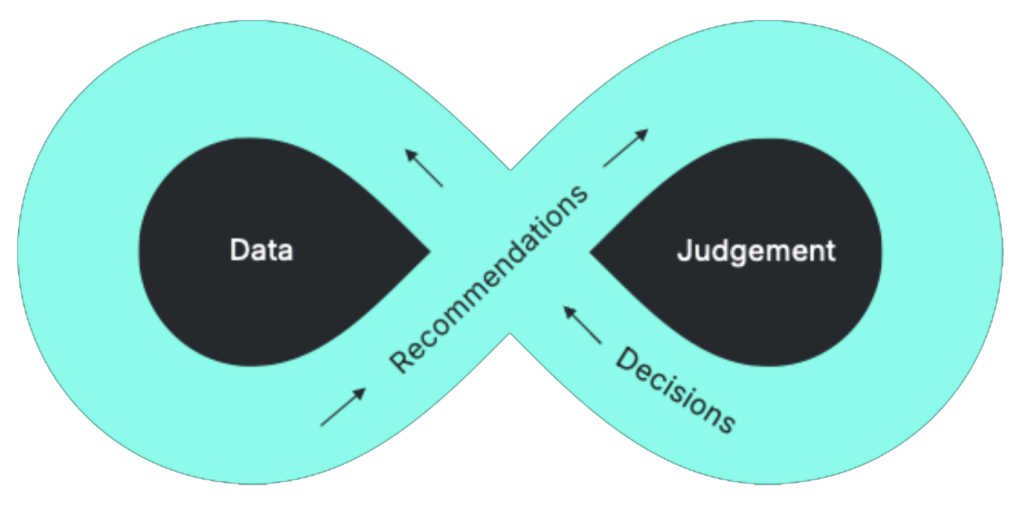
We see transformation as a continuous loop that connects four things: data, judgment, recommendations, and decisions. Each of these depends on the others. Better data leads to better judgment. Better judgment leads to better decisions. Better decisions generate better data.

It’s not a linear process. It’s a cycle.


AI strengthens parts of this loop. It improves the quality and availability of data, and it accelerates the generation of insight and recommendations.

But it doesn’t replace the need for judgment, and it doesn’t remove accountability for decisions.

Those are the points in the loop where context, experience, and trade-offs matter most. They’re also the points where transformation succeeds or fails.

So rather than trying to take people out of the process, the goal is to strengthen the loop itself — using AI to improve the flow from data through to decisions, while keeping humans firmly responsible for the outcomes.


Why context matters more than capability


One of the most useful pieces of feedback we’ve had recently came from a customer who said that none of this works unless the system understands how they operate.

Their stage gates, their financial principles, their definitions of value — these things vary between organizations, and they matter. Without that context, even the most capable AI will produce outputs that are technically correct but practically unhelpful.

That’s the difference between generic AI and applied AI.

Generic AI can generate answers. Applied AI needs to reflect the operating model of the organization it sits within. In transformation, where governance, value, and accountability are tightly defined, that context is not optional. It’s fundamental.


What a modern transformation office looks like


If you follow this through, the implication is not that transformation offices disappear, but that they change.

The traditional model is heavily dependent on people and can be difficult to scale. As programs grow in size and complexity, the demand for support grows with them.

A more modern approach is leaner and more intelligent. Systems take on more of the coordination, data handling, and repeatable work, while people focus on prioritization, trade-offs, and leadership.

The practical impact of that is significant. Planning cycles shorten. Data quality improves. Governance becomes more consistent. And teams are able to support larger programs without a linear increase in headcount.


The shift that matters


AI will change transformation. That’s already happening.

But the organizations that benefit most won’t be the ones that rush to automate everything or layer AI onto existing processes.

They’ll be the ones that take a step back and rethink how execution actually works. Where the friction is. Where capacity is being consumed. And where intelligence can genuinely improve the system.

Because this isn’t about adding AI into transformation, it’s about redesigning how transformation is executed.

And that’s a much bigger shift.


Explore how modern transformation teams are redesigning execution

How Enterprise Value Gets Lost Under the Sofa Cushions 

‍Like a remote slipping between sofa cushions, enterprise value rarely disappears in obvious ways. Everything looks fine at the surface — until it isn’t. What was there moments ago is suddenly out of reach, lost somewhere in the gaps.

You can keep feeling for the remote from where you’re sitting, reaching into the same places and hoping it turns up. Or you can stand up, step back, and see the whole sofa — and realize it was there all along, just hidden from view.

The same is true in enterprise execution. Value is rarely lost within initiatives themselves. It is lost in the handoffs, the dependencies, and the spaces between them.


The Limits of Improving Enterprise Execution in Isolation


As organizations improve how they execute transformation, a subtle but important shift begins to take place. Initiatives become better defined, governance becomes more structured, and delivery becomes more disciplined. At an individual level, this represents meaningful progress. Programs are more predictable, teams are more accountable, and outcomes are easier to track. 

But as organizations move further along this maturity curve into what we describe as Transformation 4.0, a different challenge begins to emerge. The question is no longer whether initiatives are being delivered effectively. It is whether they are working together to create enterprise value through enterprise execution. 

Most organizations are designed to optimize execution within boundaries — functions, business units, or programs. Each has clear ownership, defined objectives, and its own business case. This creates strong local performance, but it also creates blind spots. Because enterprise value is not created within initiatives. It is created across them. 

And like the remote that disappears between cushions, what is lost is not visible within any one initiative — it sits in the gaps between them.


When Good Decisions Don’t Add Up


In this environment, organizations can make a series of rational, well-supported decisions that collectively fail to maximize value. An initiative may deliver a strong return on investment when viewed in isolation, another may address a critical operational issue, and a third may unlock a new growth opportunity. Each decision makes sense on its own terms.

However, without a connected view of enterprise execution, it becomes difficult to understand how these initiatives interact. Some compete for the same resources, others address overlapping problems, and many are linked through dependencies that are not fully understood until late in delivery.

The result is not failure, but fragmentation. And fragmentation is one of the most consistent sources of value loss in large-scale transformation.


Why Alignment Alone Is Not Enough


Many organizations attempt to address this by strengthening alignment. Strategic objectives are cascaded more clearly, initiatives are mapped to enterprise priorities, and planning processes are refined. These are important steps and form a critical part of enterprise execution maturity.

But alignment operates at a directional level. It ensures initiatives are broadly moving in the same direction, but it does not ensure they are coordinated in practice. It does not provide visibility into how work flows across the organization, how dependencies are managed, or where delays are emerging within enterprise execution.

As a result, organizations can be well aligned on paper while still experiencing inefficiencies in execution. The issue is not intent — it is connectivity.


Where Value Is Actually Created


One of the defining characteristics of Transformation 4.0 is a shift in how organizations think about value. Less mature environments tend to evaluate initiatives as discrete investments, each justified through its own business case.

More mature organizations recognize that value is created through value chains — sequences of interdependent work that span functions, teams, and initiatives. These chains determine how value flows through the organization, and where it is either accelerated or constrained.

When viewed through this lens, the critical questions change. Leaders are no longer focused solely on whether initiatives are on track. They are asking: who has the ball right now? What are we waiting for? Where are the biggest risks emerging? What is the cost of delay?

These questions cannot be answered by looking at initiatives in isolation. They sit in the spaces between them — the points of dependency, the handoffs between teams, and the moments where work either progresses or stalls within the enterprise execution system.


From Managing Initiatives to Managing Dependencies


This is where value is most often lost.

A delay rarely originates within the initiative where value is ultimately realized. It begins upstream — in an enabler, a dependency, or a piece of cross-functional work that may have little or no direct value attached to it. On its own, it appears insignificant. But in the context of the value chain, it can hold up the most important outcomes in the portfolio.

This is the structural challenge within enterprise execution. Organizations are not typically managing dependencies with the same rigor as they manage initiatives. Progress is tracked, but flow is not. Status is visible, but value at risk is not.

As a result, leaders are often looking at traffic lights when they should be looking at where value is most exposed — the equivalent of searching from where you are sitting rather than stepping back to see where the issue actually sits.

“The question is no longer whether initiatives are being delivered effectively. It is whether they are working together to create enterprise value through enterprise execution. “


The Role of Cross-Functional Orchestration


Addressing this requires a shift from traditional program management to true cross-functional orchestration within enterprise execution. Transformation is not delivered by a single team or a small group of power users. It is delivered across the enterprise, through the coordinated effort of multiple functions, each contributing to the same value chain.

This requires visibility that extends beyond individual initiatives and is accessible to every participant in the system. Different roles need different perspectives — not a single view designed for a central team, but contextual visibility that allows each contributor to understand what matters, where dependencies exist, and how their work impacts value.

Without this, organizations default to managing what they can see — and what they can see is the initiative, not the system.


Local Optimization as a System Outcome


Local optimization is rarely intentional. It is a natural consequence of how organizations are structured, how information flows, and how decisions are made. Teams optimize for what they can see and control. Leaders make decisions based on the information available to them. Success is measured within defined boundaries.

Over time, this creates a system where optimization happens locally by default. While each part of the organization may perform effectively, the overall system of enterprise execution is not optimized for value.

Optimizing within initiatives does not optimize enterprise value.


The Shift to Strategic Connectivity


In Transformation 4.0, enterprise execution maturity deepens through connectivity. This means creating a structural link between strategy and execution, and between execution and value. It means making dependencies visible, understanding how value flows across the enterprise, and managing trade-offs based on where value is most at risk.

When this level of connectivity is in place, leaders are no longer reacting to delays. They are able to intervene earlier, prioritize more effectively, and make decisions that optimize outcomes across the entire system — not just within individual initiatives.


A Different Standard of Enterprise Execution


At this level of maturity, the definition of success changes. It is no longer sufficient for initiatives to deliver against their individual objectives. What matters is how effectively they contribute to enterprise outcomes through enterprise execution.

An initiative that performs well in isolation but creates downstream constraints is not delivering true value. Conversely, an enabler with no direct ROI that unlocks multiple value streams may be one of the most important investments in the portfolio.

This requires a broader perspective — one that considers not just the performance of individual initiatives, but the effectiveness of the enterprise execution system as a whole.


The Shift to Enterprise Execution


Local optimization is not a failure of execution. It reflects how most organizations are designed to operate. But as transformation becomes more complex, more cross-functional, and more value-driven, that model begins to break down.

The organizations that move forward are those that recognize that value is not created in isolated work. It is created in how that work connects — across functions, across initiatives, and across the enterprise.

And once that becomes visible, enterprise execution is no longer managed as a collection of initiatives. It is orchestrated as a system — and that is where enterprise value is truly realized.

Balancing Cost Savings with Growth

For most leadership teams, the challenge is not choosing between cost savings and growth.

Enterprises must improve efficiency while continuing to invest in innovation, new capabilities, and future revenue streams. The real difficulty lies in deciding how to balance those investments.

Growth initiatives typically carry greater uncertainty. They require capital, take time to deliver results, and involve risk. At the same time, organizations cannot rely on cost reduction indefinitely. Efficiency programs can improve margins, but pursued too aggressively they eventually begin to erode the capabilities required for long-term competitiveness.

Neither lever can be pushed indefinitely in one direction. Leaders must continually balance both.

Which initiatives deserve capital? Which programs should be accelerated, delayed, or stopped? And how should leaders weigh growth initiatives that carry greater uncertainty against efficiency programs that may be more predictable but deliver smaller long-term gains?

In many organizations, these decisions are still made through a mixture of intuition, internal politics, and executive judgment rather than structured portfolio analysis. Sometimes the loudest voice in the room wins. Sometimes the CEO makes the call based on experience.

Judgment will always play a role. But increasingly, leadership teams are asking a different question:

How do we bring more information and objectivity to these decisions?

This is where transformation leadership becomes both an art and a science.

The art lies in making the final call. The science comes from having the information needed to evaluate trade-offs, explore different scenarios, and understand the implications of each investment decision.

When organizations manage transformation as a portfolio, they introduce data and structure into decisions that historically relied on instinct alone.

The False Trade-Off

In many organizations, cost optimization and growth initiatives are still managed separately.

Cost reduction programs are often framed as defensive measures—something organizations do when margins are under pressure. Growth initiatives, by contrast, are positioned as strategic investments in the future.

But treating these efforts as separate programs creates a false divide.

Cost optimization alone rarely creates long-term value. Cutting costs may improve margins in the short term, but it does little to drive sustainable revenue growth. At the same time, growth initiatives without financial discipline can destroy value rather than create it.

Transformation-mature organizations recognize that the real objective is value creation, not simply cost reduction.

Cost discipline creates capacity. That capacity can then be reinvested into innovation, new products, acquisitions, or entry into new markets.

In other words, the goal is not simply to reduce costs. It is to cut in the right places in order to invest in the right growth opportunities.

The Reality: Margin Matters

This discipline has become even more important in today’s economic environment.

For many years, high-growth companies could rely on expanding valuation multiples to drive enterprise value. In many sectors, those multiples have now compressed significantly. Where companies once traded at ten or twelve times EBITDA, many are now closer to seven.

That shift changes the equation.

When valuation multiples decline, enterprise value increasingly depends on margin expansion and sustainable earnings growth.

Organizations must demonstrate operational discipline while still investing in the initiatives that drive long-term value.

This requires balancing two different types of work:

  • improving efficiency and expanding margins
  • investing in initiatives that drive future growth

Neither works in isolation.

“Transformation-mature organizations recognize that the real objective is value creation, not simply cost reduction.”

From Cost Programs to Value Creation

Traditional transformation programs have often focused heavily on cost reduction. Consulting firms have historically built large practices around cost-out programs, turnaround initiatives, and operational recovery efforts.

While these approaches can deliver short-term improvements, they rarely provide a complete answer.

Over the past decade, many organizations have begun reframing transformation more broadly as value creation.

Value creation includes launching new products, entering new markets, acquiring capabilities through M&A, improving customer experience, and building new sources of revenue.

Cost optimization remains part of the equation, but it is no longer the primary objective. Instead, it becomes a means of funding strategic investment.

This philosophy is reflected in concepts such as “Fit for Growth,” which connect cost discipline directly to strategic investment.

The principle is simple: cut fat, not muscle, and reinvest the savings into the initiatives that drive long-term growth.

The Portfolio Perspective

Execution-mature organizations manage transformation as a portfolio of value creation initiatives.

Rather than evaluating initiatives in isolation, leadership teams consider how investments work together across the portfolio.

This perspective allows leaders to examine different scenarios and understand how various investment decisions affect overall outcomes.

What happens if a major initiative is delayed?
What if investment in a new growth opportunity is accelerated?
How do different combinations of initiatives affect margin, revenue, and long-term enterprise value?

Scenario planning allows leadership teams to explore these trade-offs before committing capital.

As Warren Buffett famously observed:

“The most important job of a CEO is capital allocation.”

Yet most transformation environments are not structured to support that discipline. Leaders often lack a clear view of how resources are distributed across initiatives and what value those investments are expected to deliver.

Without that visibility, trade-offs are difficult to manage deliberately.

Why This Is Difficult in Practice

Despite the appeal of portfolio thinking, most organizations struggle to implement it.

Strategy often exists in one system while delivery is tracked somewhere else. Benefits realization may be managed in spreadsheets, and financial reporting typically arrives long after decisions have been made.

By the time leadership teams gain a clear view of what is happening across the portfolio, the opportunity to intervene has often passed.

Programs continue long after their assumptions have changed, and new initiatives are introduced without fully understanding the impact on the broader portfolio.

Trade-offs are made—but rarely deliberately.

When Transformation Becomes Business as Usual

Another reason this challenge persists is that many organizations still treat transformation as a temporary initiative.

Traditionally, transformation was framed as a program with a defined start and end point. Once the program concluded, the organization returned to normal operations.

That model increasingly no longer reflects reality.

Technology evolves continuously. Markets shift rapidly. Competitive pressures require constant adaptation.

For many enterprises, transformation is no longer episodic—it is ongoing.

In what we describe as Transformation 4.0, change becomes a permanent capability of the enterprise rather than a temporary program.

Many organizations are now establishing Value Creation Offices or similar leadership structures to oversee this work. These teams operate with a multi-year horizon—typically three to five years—while tracking progress against annual financial targets.

Their role is not simply to deliver projects. It is to continuously manage how capital and resources are allocated across the transformation portfolio.

Strategic Alignment Is a System, Not a Meeting

Many organizations attempt to address alignment challenges through governance forums: monthly steering committees, quarterly portfolio reviews, or periodic strategy refresh cycles.

While these mechanisms are important, meetings alone cannot create alignment.

Alignment requires structural connectivity between strategy, initiatives, financial outcomes, and governance decisions. When these elements are connected within a single execution system, leadership teams gain the ability to manage trade-offs deliberately.

Not just during annual planning cycles—but continuously.

The Mark of Execution Maturity

Execution maturity is not defined by how many initiatives an organization launches.

It is defined by how deliberately it allocates resources across them.

Mature organizations maintain clear alignment between strategy and initiatives, evaluate programs against expected value, and reallocate resources when assumptions change. Just as importantly, they are willing to stop work when initiatives no longer deliver meaningful impact.

In practice, this means treating transformation not as a collection of projects, but as a managed portfolio of value creation.

Reframing the Conversation

The real leadership challenge is not choosing between efficiency and growth.

It is balancing investments across both in a way that maximizes long-term enterprise value.

In a world where transformation is constant, execution is no longer just about delivering projects.

It is about deliberately allocating capital, capacity, and attention to the initiatives that create the most value.


Transformation 4.0 Series

Exploring how modern enterprises are redesigning the systems that turn strategy into realized value.

Benefits Realization: Where Value Is Won or Lost

What this article covers

  • Why value erosion follows a predictable pattern: exaggeration, destruction, and decay
  • How benefits realization must operate as a discipline, not a reporting task
  • The role of Outcome-Driven Discipline and Data-Informed Decision Making
  • Why transformation credibility depends on actively governing value

Value Is Not Secured at Approval

In the previous article, we explored why accountability breaks at scale. Governance becomes performative. Ownership becomes symbolic. Decisions lose consequence.

But accountability alone does not prove transformation.

Value does.

Every transformation begins with declared value. A business case is approved because projected benefits are expected to outweigh investment. Capital is allocated on the assumption that outcomes will justify cost.

Yet approval does not secure value. It authorizes risk.

Value is secured only if it is actively governed from planning through delivery and into realization.

Over many years, I have seen value erosion follow a consistent pattern. It rarely happens abruptly. It unfolds in three stages: exaggeration, destruction, and decay.

Stage One: Value Exaggeration

Value exaggeration occurs before execution even begins.

In early planning stages, the enthusiasm for change combines with the pressure to secure funding. Optimism bias takes hold. Strategic ambition is translated into financial projections that may rest on high-level assumptions rather than operational clarity.

Cost matching often follows. The cost of a program is estimated, and benefits are retrospectively shaped to justify it. Objectives such as “increase customer profitability” or “improve sustainability” are converted into financial outcomes without a sufficiently detailed understanding of the operational changes required to realize them.

Exaggeration is rarely malicious. It is cultural. Organizations want change to be viable, so assumptions are stretched to make it so.

Without Outcome-Driven Discipline at this stage, exaggeration becomes embedded in the foundation of the program.

Stage Two: Value Destruction

If exaggeration begins in planning, destruction occurs during delivery.

Once execution is underway, decision-making frequently shifts toward cost and schedule containment. Delivery teams focus on timelines. Steering committees focus on budget control.

In that environment, scope changes are approved or rejected based primarily on cost impact — often without assessing the effect on long-term value realization.

Reducing scope may protect short-term cost metrics while undermining strategic benefits. Delays may appear neutral when evaluated in nominal terms, yet destroy value when time-to-benefit and cash flow realities are considered.

The objective of transformation is to create organizational value. Yet delivery decisions are too often optimized around cost control rather than value generation.

Data-Informed Decision Making requires something different. Every material change in scope, timing, or investment should trigger a benefit impact assessment. Without that discipline, value destruction is incremental and largely invisible.

“The objective of transformation is to create organizational value. Yet delivery decisions are too often optimized around cost control rather than value generation.”

Stage Three: Value Decay

Even when delivery concludes successfully, value is not automatically realized.

The most common failure at program close is the absence of structured transition into operational ownership. Finance may continue to track forecasts and variances, but often in isolation. Delivery teams disband. Assumptions embedded in the original business case are no longer revisited.

If adoption lags, if operational behaviors do not shift, or if external conditions change, corrective action is rarely taken. The program is deemed successful because it was delivered on time and within budget.

Yet value may already be decaying.

Benefits realization does not end at go-live. In many transformations, it has only just begun.

Without sustained governance and cross-functional accountability, forecast value gradually separates from realized value — and credibility erodes with it.

The Sydney Opera House: A Case in Point

The Sydney Opera House is frequently cited as one of the most mismanaged construction projects in history. Construction began without finalized designs. Scope evolved significantly. Costs exceeded the original budget by roughly 1,400 percent. Completion was a decade late.

By traditional project metrics, it failed.

Yet today, it generates approximately $1.2 billion in annual economic value and carries an estimated social asset value of $4.6 billion. It is one of the most recognizable cultural landmarks in the world.

Why?

Because the strategic objective never wavered.

Despite governance failures and cost escalation, the original vision — to create one of the world’s most iconic opera houses — remained intact. The value intent anchored the endeavor. Certain design and scope decisions were revised for practicality, but the underlying ambition was preserved.

The lesson is not that cost overruns are acceptable. It is that value discipline must anchor decision-making throughout the lifecycle of change. When the vision erodes, value collapses. When cost discipline dominates without regard to strategic intent, value can be destroyed. But when strategic value remains the guiding principle, long-term outcomes can still justify short-term turbulence.

The Opera House illustrates a critical truth: value must be governed deliberately, not assumed passively.

From Declared Value to Engineered Value

The pattern of exaggeration, destruction, and decay reveals a structural gap.

Benefits realization cannot sit outside execution as a financial reporting exercise. It must be embedded into how transformation is designed and governed.

This is the essence of Transformation 4.0.

Outcome-Driven Discipline ensures that value assumptions are interrogated before capital is committed.
Data-Informed Decision Making ensures that delivery decisions are evaluated against economic impact.
Ongoing governance ensures that realized benefits are actively managed beyond program closure.

When benefits are treated as an operating discipline rather than a reporting task, organizations build value credibility. Boards gain confidence. Capital allocation becomes evidence-based. Leaders can distinguish between initiatives that are creating value and those that are simply consuming resources.

Where Value Is Won

Value is not won in the approval meeting.
It is not won at go-live.

It is won in the continuous management of assumptions, decisions, and outcomes across the entire lifecycle of change.

Value does not disappear.

It erodes when it is not actively managed.

Execution maturity is measured not by how much work is delivered, but by how much value is realized — and how early leaders can detect when that value is at risk.

Benefits realization is where transformation credibility is either built or lost.


Is your organization governing value — or simply reporting it?

If benefits are tracked in spreadsheets, reviewed retrospectively, or owned in isolation, value erosion may already be underway.

Explore how Amplify embeds benefits realization into the execution layer — turning declared value into engineered value.

Request a Demo

Lies, Damn Lies, and Business Cases

There’s an old line often attributed to Mark Twain:

“There are three kinds of lies: lies, damn lies, and statistics.”

It applies uncomfortably well to business cases.

Not because people are dishonest.
But because business cases are designed to secure approval.

They are built on assumptions.
They are optimistic by necessity.
And once approved, they are rarely interrogated again.

The problem is not the business case itself.
It’s what happens when assumptions are treated as facts.

The Business Case Is Not the Problem

A business case serves an important purpose.

It forces clarity of intent.
It articulates expected value.
It defines why capital and capacity should be allocated.

But in many organizations, once approved, it becomes an artifact — filed, referenced, and largely forgotten.

Execution moves forward.
Resources are consumed.
Governance tracks schedule, spend, risk, and delivery milestones.

What is rarely asked is:

Are the assumptions still true?
Is the value still achievable?

“This is not a technology gap. It is a decision discipline gap.”

Static Business Cases Create Static Decisions

Traditional business cases are snapshots in time.

They assume:

  • Costs remain stable
  • Benefits materialize as forecast
  • Risks behave as expected
  • Market conditions remain broadly consistent

In reality:

  • Interest rates change
  • Tariffs shift
  • Input costs rise
  • Customer demand fluctuates
  • Competitive pressure intensifies

Even internal assumptions — such as expected customer adoption, pricing, or cost of production — can erode quickly.

If those assumptions change, so does the value.

Yet governance often continues to focus on:

  • Schedule adherence
  • Budget variance
  • Resource utilization
  • Risk logs

All important.
But none answer the most critical question:

Is this initiative still worth the capacity and investment we are allocating to it?

This is not a technology gap.
It is a decision discipline gap.

“Transformation maturity is not about approving more initiatives. It is about resourcing only the initiatives that continue to earn it.”

Transformation 4.0 Requires Living Business Cases

If transformation is continuous — not episodic — then the business case cannot remain static.

It must become a living instrument.

That means three things.

1. Test Assumptions Explicitly

Every major initiative is built on assumptions:

  • Cost of capital
  • Market growth
  • Adoption rates
  • Productivity gains
  • Pricing stability

Those assumptions should be visible — and reviewed regularly.

Not annually.
Not at post-implementation review.
But during execution.

2. Track Lead Indicators — Not Just Outcomes

Many organizations measure value only at the end.

But by the time benefits fail to materialize, capacity has already been consumed.

Mature organizations identify lead indicators that signal whether value is still on track.

For example:

  • Early adoption metrics
  • Sales pipeline conversion
  • Operational cycle time improvements
  • Cost reduction run-rate
  • Productivity trend data

Lead indicators provide early warning.

They allow recalibration before value is lost.

3. Review the Business Case During Benefits Realization

Benefits realization is often treated as a retrospective exercise.

Lessons learned.
Variance explained.
Value confirmed — or quietly written down.

Transformation 4.0 treats benefits realization as an active steering mechanism.

The business case becomes the baseline for measurement:

  • Are benefits tracking?
  • Are assumptions holding?
  • Has value increased?
  • Has it diminished?

If the answer changes, resource allocation should change.

Not because something failed.
But because reality evolved.

The Hardest Discipline: Reallocating Scarce Capacity

The true test of execution maturity is not how well an organization launches initiatives.

It is how confidently it reallocates capacity when the facts change.

That requires:

  • Visibility into real performance
  • Transparency of assumptions
  • Governance that enables recalibration
  • Courage to challenge sunk-cost thinking

In today’s uncertain environment, capital is constrained.
Capacity is limited.
Volatility is constant.

Organizations cannot afford to be wrong for long.

Decision integrity matters.

From Artifact to Instrument

The purpose of a business case is to secure funding.
The purpose of execution is to create value.

In immature systems, those two objectives diverge.

In mature systems, they remain tightly linked.

The business case does not disappear.
It evolves.

From artifact.
To instrument.
From justification.
To accountability mechanism.

When Capacity Is Scarce, Assumptions Matter

Every Transformation Office eventually faces the same reality:

If we can only resource one initiative, which should it be?

In theory, the answer is simple: the one that creates the most value.

In practice, decisions are often influenced by:

  • Historical momentum
  • Political sponsorship
  • Prior investment
  • Forecasts created under different market conditions

When demand exceeds capacity — and it always does — trade-offs must be made.

The real question is whether those trade-offs are based on:

Current evidence, or outdated assumptions?

The question is not whether your business cases are optimistic.

They almost always are.

The real question is whether your organization is willing to test those assumptions in-flight — and reallocate capacity when the value no longer justifies it.

Transformation maturity is not about approving more initiatives.

It is about resourcing only the ones that continue to earn it.

If you’d like to explore how mature organizations operationalize living business cases and continuous value visibility, speak to our team.


Accountability Theatre: Why Ownership Breaks at Scale

In this blog:

  • Why accountability weakens as transformation complexity increases
  • The structural difference between responsibility and ownership
  • How “accountability theatre” shows up inside executive environments
  • What leadership discipline looks like in mature organizations

The Illusion of Accountability


As transformation complexity grows, governance becomes more sophisticated. Stage gates are defined. Dashboards are created. Steering committees are formalized.

From the outside, this looks like control.

Yet many large-scale initiatives stall not because of poor strategy, but because ownership quietly diffuses.

This is accountability theatre — the appearance of responsibility without sustained accountability.

It rarely happens dramatically. It emerges gradually as complexity increases and executive attention fragments.

When Ownership Becomes Symbolic


At launch, accountability appears clear.

An executive sponsor is named.
Workstreams are defined.
Milestones are agreed.

Months into delivery, ownership often shifts from active to symbolic.

Sponsors attend intermittently.
Reports show progress.
Risks are logged.

Ask a simple question — Who owns the outcome? — and several names may surface.

What is often missing is a single leader willing to say:

“If this fails, that’s on me.”

Ownership becomes shared in theory and diluted in practice.

Responsibility vs. Accountability


The distinction is simple —and foundational.

Responsibility is task-oriented and can be distributed.

Accountability is outcome-oriented and ultimately rests with one owner.

Responsibility answers:
“Who is delivering the work?”

Accountability answers:
“Who stands behind the result?”

Organizations assign responsibility well. They concentrate accountability far less consistently.

Without concentrated accountability, execution slows — particularly when trade-offs are required.

Why Ownership Breaks at Scale


The erosion of ownership is structural.

As portfolios expand, interdependencies increase and decisions require coordination across multiple leaders. Shared accountability becomes the default.

At the same time, executive attention does not scale linearly. Sponsorship shifts from active steering to periodic oversight.

And when governance becomes informational rather than consequential — when deviations are noted but not acted upon — accountability weakens further.

The result is predictable:decision velocity declines, prioritization softens, and ownership becomes symbolic.

“Strategy rarely fails because leaders do not care. It fails because ownership diffuses as scale increases.”

The Quiet Cost of Diffused Ownership


When accountability fragments, the effects are subtle.

Decision-making slows.
Priorities blur.
Underperformance is tolerated longer than it should be.

Importantly, this does not immediately appear as failure. Delivery continues. Milestones are met. Dashboards remain broadly positive.

But impact softens.

Value targets remain intact on paper while realization drifts in practice.

By the time financial outcomes reflect the erosion, the structural cause — diffused accountability —is already embedded.

The Transformation 4.0 Answer: Designing for Ownership


Accountability does not strengthen through intention alone. It strengthens through design.

Transformation 4.0 organizations recognize that ownership must be built into the operating model itself.

They make three structural shifts.

1. From Named Sponsors to Outcome Owners

A sponsor participates in governance.
An outcome owner carries measurable performance responsibility.

In execution-mature environments, strategic outcomes — revenue growth, cost reduction, margin improvement, adoption targets — are explicitly tied to a single accountable executive. That accountability is visible and persistent.

Ownership is not symbolic.It is structural.

2. From Activity Reporting to Outcome Transparency

Many organizations track delivery progress. Fewer track value realization with equal rigor.

Transformation 4.0 systems connect initiatives directly to financial and operational impact. Leaders can see not only what is being delivered, but whether the intended value is materializing — and who is accountable for closing the gap.

Transparency reinforces accountability.

When performance is attributable, ownership strengthens naturally.

3. From Governance Ritual to Decision Discipline

Governance becomes powerful only when it changes behavior.

In mature systems:

  • Performance deviations trigger action.
  • Trade-offs are explicit.
  • Prioritization is dynamic.
  • Underperforming initiatives are reshaped or stopped.

Accountability is not about blame.

It is about disciplined decision-making aligned to outcomes.

Why This Matters in Continuous Transformation


Transformation is no longer episodic. It is continuous.

Organizations are simultaneously managing growth, cost discipline, modernization, regulatory change, and operational improvement.

In this environment, execution systems must be designed for ownership endurance.

Launch energy is insufficient.

Execution maturity requires accountability that holds under complexity, competing priorities, and sustained pressure.

The Turning Point in the Maturity Curve


Strategy rarely fails because leaders do not care.

It fails because ownership diffuses as scale increases.

Committees expand.
Reporting deepens.
Visibility improves.

But without concentrated accountability, progress becomes polite. And polite execution rarely produces outsized outcomes.

Governance ensures visibility.
Leadership ensures movement.

When Leadership & Accountability is weak, the next breakdown is predictable.

Value does not disappear overnight.

It erodes — when it is not actively owned.

And once ownership is structurally clear, the next question becomes unavoidable:

If someone is truly accountable for the outcome,
how do you ensure the value is actually realized?

That is where transformation moves beyond structure — and into discipline.

And it is where value is ultimately won or lost.

Move Beyond Accountability Theatre


If ownership is diffused across your transformation portfolio, visibility alone won’t fix it.

See how Amplify embeds structural accountability across strategy, execution, and value realization.

Contact us

Governance Isn’t Meetings: A Decision System for Transformation 4.0

In this blog:

  • Why governance fails when it focuses on meetings instead of decisions
  • How Adaptive Governance reframes governance as a decision system
  • Two maturity signals that matter: decision latency and escalation effectiveness
  • Why credible C-level sponsorship depends on governance that decides

For years, organizations have treated governance as a scheduling problem — not a decision one.

More forums.
More cadence.
More decks.
More checkpoints.

And yet, despite all the structure, the same frustrations persist: decisions take too long, escalations go nowhere, and value leaks quietly while everyone gets “aligned.”

The issue isn’t a lack of governance.
It’s that governance has been equated to activity rather than outcomes.

In Transformation 4.0, that distinction matters.

Governance in the Age of Transformation 4.0

Transformation 4.0reflects a fundamental shift: transformation is no longer episodic or program-based. It is continuous, cross-functional, and business as usual.

That shift breaks traditional governance models.

Project-era governance was designed to:

  • Review progress
  • Control risk through stage gates
  • Report status upward

But enterprise transformation today requires something different:

  • Faster decisions under uncertainty
  • Clear trade-offs between competing priorities
  • Senior sponsorship that translates into action, not endorsement

When governance doesn’t evolve, organizations end up with motion instead of momentum.

The Reframe: From Cadence to Consequence

A useful question for any governance forum is simple:

What is the cost of delay?

Traditional governance optimizes for cadence — first in, first out.
Modern governance optimizes for consequence — prioritizing decisions by value, risk, and timing.

At low levels of maturity, governance is defined by cadence.
At higher levels of maturity, governance is defined by consequence.

Traditional governance asks:

  • Is it on the agenda?
  • Do we have alignment?
  • Did we review this?
  • Was it presented to the right forum?

Transformation-grade governance asks:

  • What value is at stake in this decision?
  • What decision is actually required?\What are the consequences of indecision?
  • What are the consequences of indecision?
  • What changes if we decide — or don’t?

Governance only works if it materially changes decisions.

That single test exposes why so many well-intentioned governance models fail.

The Hidden Trap: Static Business Cases

One of the most common ways governance undermines decision quality is through static business cases.

An investment decisionis made, the business case is approved — and from that point on, the initiative is effectively doomed to completion. Few organizations are willing to stop ormaterially change course once funding has been committed.

The problem isn’t the original decision.
It’s what happens next.

The assumptions that underpinned the business case — often external — are rarely re-tested:

  • Have market conditions changed?
  • Do the benefits still stack up?
  • Has risk increased or shifted?

Reviews tend to happen after the fact, when it’s already too late to change course.

In Transformation 4.0, governance must move beyond static approval toward living business cases— where outcomes are monitored in near real time and decisions can be revisited while they still matter.

Two Signals of Adaptive Governance Maturity

As part of the Transformation Office maturity framework, Adaptive Governance focuses on how effectively an organization converts insight into action.

Two signals matter far more than meeting frequency or reporting quality.

1. Decision Latency

Decision latency measures the elapsed time between identifying an issue and committing to a course of action.

Not time between meetings.
Not time spent preparing decks.
But real time to decision.

High decision latency creates:

  • Value erosion
  • Execution drag
  • Loss of confidence at the executive and board level

Mature organizations don’t just track delivery speed.
They track decision speed.

2. Escalation Effectiveness

Escalation is meant to resolve uncertainty — not redistribute it.

In low-maturity environments, escalation often results in:

  • Requests for more analysis
  • Deferred accountability
  • Decisions being reopened repeatedly

In high-maturity environments, escalation:

  • Clarifies ownership
  • Forces trade-offs
  • Produces durable decisions

Executives disengage from governance when escalation fails to do what it exists for: decide.

Adaptive Governance in Practice

Adaptive Governance recognizes that not all decisions carry the same risk, value, or urgency.

It means:

  • Decision rights are explicit, not assumed
  • Governance intensity flexes based on context
  • Escalation paths are designed to resolve, not report

As maturity increases, governance evolves from fixed forums and rigid cadence to a dynamic decision system that adjusts as uncertainty reduces.

This is the difference between governance as ritual and governance as leadership.

Adaptive Governance isa hallmark of high-maturity Transformation Offices.

From Governance to Agile Portfolio Decisions

When governance functions as a decision system, portfolio management becomes inherently more agile.

Rather than approving investments once and hoping assumptions hold, leaders can regularly:

  • Re-test value and risk
  • Compare initiatives based on current conditions
  • Make explicit decisions to stop,  start, expand, or reallocate

Often on a quarterly cadence.

This is not about instability or constant churn.
It is about maintaining strategic control in an environment where change is constant.

Why This Matters for C-Level Sponsorship

Lack of executive sponsorship is often cited as a root cause of transformation failure.

In reality, sponsorship usually erodes for a different reason.

Senior leaders disengage when governance:

  • Surfaces issues too late
  • Obscures real choices
  • Fails to show consequences
  • Dilutes accountability

Strong governance earns executive time by presenting real decisions, clearly framed, with visible impact.

Credibility at the C-level is built when governance helps leaders do what only they can do: decide.

The Amplify Perspective

At Amplify, we believe governance is not a layer on top of execution.
It is the operating system that shapes how execution happens.

Governance only works if it materially changes decisions.

That belief is whyAmplify was designed to:

  • Make decision latency visible
  • Clarify ownership and decision rights
  • Tie decisions directly to value, not activity
  • Support escalation that resolves rather than reports

Adaptive Governance is not about control.
It is about momentum, trust, and value realization at scale.

Governance as a Leadership Capability

Transformation 4.0 demands more than ambition and alignment.

It demands governance that decides.

Not more meetings.
Not thicker decks.
But a decision system that converts insight into action — fast enough to matter.

That is the shift from governance as process
to governance as leadership.

If you’re rethinking how execution decisions are made in your organization, explore how execution maturity changes outcomes— from earlier intervention to sustained value creation.

Learn more about Transformation 4.0 and the execution maturity journey, or start a conversation about what this shift could mean for your Transformation Office or EPMO.

Seeing Isn’t Deciding: Why Data Fails Without Execution Maturity

Most organizations today can see more than ever before.

Dashboards are richer. Data is more available. Reports arrive faster.
Visibility, at least on paper, has improved dramatically.

And yet outcomes often don’t.

Decisions are delayed. Trade-offs are avoided. Risks surface too late to change direction. Value slips — not because it was invisible, but because it wasn’t acted on.

This is one of the most misunderstood gaps in modern transformation:
seeing is not the same as deciding.

The Visibility Trap

As organizations mature beyond basic delivery, visibility is usually the first capability they invest in.

They centralize data. Standardize reporting. Build enterprise dashboards.
The assumption is simple: if leaders can see what’s happening, better decisions will follow.

But in practice, many Transformation Offices and EPMOs discover a frustrating reality:

We have more data than ever, but it hasn’t changed how decisions get made.

This is not a tooling problem.
It is an execution maturity problem.

Why Data Rarely Changes Decisions

In less mature execution environments, data tends to be treated as evidence, not input.

Reports explain what already happened. Dashboards confirm progress. KPIs validate assumptions.

By the time an issue is undeniable, options are already constrained.

Decisions still happen, but they happen:

  • Late, when momentum is hard to stop
  • Politically, when evidence threatens sunk cost
  • Reactively, when outcomes are already locked in

The organization sees more, but it doesn’t decide differently.

Lagging Insight vs. Leading Insight

One of the clearest signals of execution maturity is the type of insight an organization relies on.

Lagging insight tells you:

  • Whether milestones were met
  • Whether spend tracked to plan
  • Whether benefits were realized after delivery

Leading insight tells you:

  • Whether assumptions are breaking
  • Where dependencies are becoming fragile
  • Which initiatives are creating risk or crowding out value
  • Where intervention would still change the outcome

Most organizations are very good at the first category.
Very few are consistently good at the second.

Transformation 4.0 demands the shift.

Decisions Are the Unit of Value

In modern execution environments, value is not created by activity or even by insight.

It is created by decisions made early enough to matter.

That requires:

  • Insight structured around decisions, not report
  • Governance that enables trade-offs, not just review
  • Data that highlights exposure and options, not just performance

When insight is disconnected from decision rights, timing, and consequence, it becomes informational — not transformational.

Judgment Is the Missing Layer

One important distinction often gets lost in conversations about data and automation.

Insight can recommend.
Systems can surface options.
But judgment still sits with leaders.

Execution maturity is not about removing human decision-making — it is about supporting it with better context, clearer trade-offs, and earlier signals.

In mature environments, insight exists to augment judgment, not replace it. Leaders are presented with recommendations, exposure, and consequence — but they remain accountable for choosing a direction.

This is what enables confident intervention:
not blind automation, and not intuition alone, but informed judgment exercised at the right moment.

Execution as a System, Not a Set of Views

This is why execution maturity is not about adding better dashboards.

It is about designing execution as a decision system:

  • Where strategy, value, risk, and delivery are visible together
  • Where signals escalate naturally to the level that can act
  • Where decisions are revisited as conditions change

In mature environments, insight flows through the system — not just up it.

Seeing improves.
But more importantly, deciding improves.

The Maturity Shift

Organizations that make this shift don’t suddenly become more analytical.
They become more intentional.

They stop asking:

“Do we have the data?”

And start asking:

“What decision should this data change, and when?”

That question sits at the heart of execution maturity and at the heart of Transformation 4.0.

If you’re rethinking how execution decisions are made in your organization, explore how execution maturity changes outcomes— from earlier intervention to sustained value creation.

Learn more about Transformation 4.0 and the execution maturity journey, or start a conversation about what this shift could mean for your Transformation Office or EPMO.

The Discipline to Stop: A mini-manifesto for outcome-driven execution

Most transformations become very good at looking successful while achieving very little.

Initiatives multiply.
Dashboards glow green.
Progress is reported religiously.

And yet, when leaders ask the simplest questions such as:
Where are the results? What has changed? What is the measurable impact?

The answer is often unclear.

This isn’t a failure of effort.
It’s a failure of execution discipline.

How Activity Becomes the Goal

In many organizations, activity quietly replaces outcomes as the signal of success.

Starting initiatives feels like momentum.
Delivering outputs feels like progress.
Staying busy feels productive.

Over time, the transformation stops changing the business and starts sustaining itself.

Everyone is moving.
No one is arriving.

The “Busy but Stuck” Reality

This pattern is easy to recognize once you’veseen it:

  • Programs that never end — only rebrand
  • Initiatives that survive because stopping them feels political
  • Benefits discussed confidently, but rarely realized
  • Leaders sensing drift, but unable to challenge it without friction

The danger is that nothing appears broken.

The organization is active.
The transformation looks alive.

But progress has quietly disconnected from outcomes.

Why Structure Isn’t the Answer

When this gap becomes visible, the instinct is usually to add control.

More oversight.
More reporting.
More forums.

But motion without outcomes isn’t a governance problem.

It’s a discipline problem.

Without clear outcome ownership, explicit value expectations, and the ability to pause and evaluate work that isn’t delivering. Because activity becomes the measure of success, pausing and evaluating work would have a negative impact on our ‘progress’.

Not through negligence — but through design. Inadvertently we’ve designed a system that prioritizes activity over outcomes.

The Discipline That Separates Serious Transformations

Execution discipline isn’t about working harder.

It’s about having the courage to intervene:

  • distinguish effort from impact
  • challenge initiatives that are “nearly there”
  • reallocate resources away from momentum and toward value
  • treat project cancellation as a considered decision, not a failure

Most transformations avoid this moment.

Activity is easier to defend than outcomes.

What Actually Drives Change

Outcomes don’t emerge from motion.

They emerge from decisions made early enough to matter.

That requires treating execution as a living system

  • Outcomes first, initiatives second
  • Evidence over optimism
  • Decisions revisited, not rationalized
  • Progress defined by change, not volume

When this discipline exists, activity becomes purposeful.

Without it, motion becomes the strategy.

The Shift That Changes Everything

The organizations that escape the “busy but stuck” cycle don’t add more effort.

They change the measure of success.

From activity to outcomes.

Execution stops being about how much is happening — and starts being about having the discipline to pause, evaluate, and change direction.

That shift is uncomfortable.
It’s confronting.
And it’s foundational to transformation maturity.

Explore how execution maturity changes transformation outcomes.

Learn how disciplined, value-led execution enables organizations to intervene earlier, prioritize better, and deliver sustained impact.

Book a Demo

Continue the series: Read Transformation 4.0: Why Strategy Execution Is Entering a New Era

The Illusion of Control: What Execution Maturity Really Looks Like

In Earlier Transformations, Control Was Optional

In earlier eras of transformation, organizations often succeeded despite not having full control — meaning they lacked timely, decision-grade insight into risk, dependencies, and value, but could still deliver acceptable outcomes.

Programs were discrete. Dependencies were manageable. Value expectations were narrower and often back-ended. If leaders delivered agreed milestones, transformation was generally considered successful— even if visibility into execution was imperfect and insight arrived late.

Many organizations “won” by managing around gaps in information

  • Decisions were made with partial visibility
  • Risks were addressed reactively
  • Value was assumed once delivery was complete
  • Benefits were checked after the fact when it     was too late to make adjustments

The execution model could tolerate this. Governance built around milestones, status reporting, and escalation cycles was usually sufficient.

That world no longer exists.

Why That Model No Longer Holds in Transformation 4.0

Transformation 4.0 has fundamentally changed what control means.

Execution now spans portfolios, not programs. Value is expected continuously, not at the end. Capital is constrained. Dependencies cut across functions, geographies, and operating models. In this environment, visibility to value is no longer optional — it is essential.

The signals that once indicated control — green dashboards, completed milestones, orderly governance forums — no longer tell leaders what they need to know. They show activity, not exposure. Progress, not risk. Motion, not value.

Yet many organizations continue to govern execution as if those signals still equate to control. That gap — between what leaders can see and what they can actually act on — is where the illusion of control takes hold.

Why Control Feels Stronger Than It Is

Most organizations today are not short on visibility.

They have dashboards, reports, KPIs, and governance forums. Status is updated. Risks are logged. Reviews happen on cadence.

On paper, this should create confidence. In practice, many transformation leaders feel the opposite — a persistent unease that progress looks better than it really is, that risk is building somewhere out of view, and that value may not materialize in the way the plan suggests.

This is not a failure of effort or intent. It is a failure of execution maturity.

Visibility Is Not the Same as Control

One of the defining characteristics of less mature execution environments is the belief that visibility equals control.

If the dashboard is green, things must be fine.
If the report is complete, governance must be working.
If risks are logged, they must be managed.

But in Transformation 4.0, control is no longer about knowing what is happening. It is about knowing when to intervene, where to intervene, and what trade-offs to make — while there is still time to change the outcome.

That requires decision-grade insight, not just status.

Surface Stability, Structural Fragility

As execution complexity increases, pressure builds quietly.

Initiatives optimize locally. Dependencies remain implicit. Ownership diffuses as portfolios grow. Assumptions embedded in business cases are not revisited as conditions change.

From the top, everything still appears stable. Underneath, fragility accumulates.

This is why transformation so often feels calm — right up until outcomes slip, confidence erodes, and leaders are forced into reactive decisions.

The breakdown is rarely sudden. The warning signs were there early. What was missing was the ability to act on them.

A Maturity Gap, Not a Governance Gap

When transformation breaks late, the instinctive response is often to add more governance: more meetings, more reporting, more escalation.

But this treats the symptom, not the cause.

The real issue is not cadence.
It is how insight flows through the execution system, how early signals are interpreted, and how decisions are enabled to adapt while options still exist.

Less mature execution environments tend to

  • Optimize for reporting completeness rather than decision relevance
  • Govern through review cycles rather than early intervention
  • Treat data as retrospective evidence, not a live input to execution choices

More mature environments behave differently:

  • Insight is structured to inform specific decisions
  • Governance exists to change priorities, funding, or direction — not just to review progress
  • Signals are acted on while options still exist

This difference is subtle, but decisive.

Why This Matters More in Transformation 4.0

In Transformation 4.0, the cost of late insight is far higher than it used to be.

Portfolios are larger. Trade-offs are harder. Capital is scarcer. And the distance between decision and impact is shorter.

When organizations rely on outdated control models, they don’t just lose time — they lose value.

Execution maturity is what allows organizations to move from apparent control to real control: the kind that enables confident intervention, deliberate trade-offs, and sustained value creation.

From Illusion to Insight

True control does not come from more dashboards or tighter reporting cycles.

It comes from insight that is connected, decision-relevant, and timely — insight that allows leaders to intervene early enough to protect outcomes, not explain misses after the fact.

This is the shift many organizations have yet to make, and it is one of the clearest signals of execution maturity.

Invitation to Engage

If this resonates, I’d welcome your perspective:

  • Where do you see the biggest gaps between visibility and action today?
  • What early signals tend to be acknowledged but not acted on?

And what would give you greater confidence in execution decisions — not just better reporting?

Want to explore how execution maturity shows up in practice?

Discover how Amplify partners with Transformation Offices and EPMOs to enable decision-grade insight and sustained value creation. Book demo.

Transformation 4.0: Why Strategy Execution Is Entering a New Era

Over the past decade, many industries have gone through a fundamental shift in how work gets done.

Industry 4.0 reframed manufacturing — not as a set of isolated processes, but as a connected system powered by data, automation, and real-time insight. It was not just about doing the same work faster. It was about building the capability to adapt continuously.

Transformation is going through a similar shift.

This is Transformation 4.0 and it fundamentally changes how strategy gets executed and how value gets created.

Rethinking What “Good at Transformation” Really Means

Most organizations invest significant time, energy, and capital into transformation.

They create roadmaps. Build dashboards. Establish governance forums. Stand up Transformation Offices. They deliver programs, implement systems, and at times declare success.

But do most organizations truly believe they are good at transformation?

In reality, many Transformation Offices are created precisely because the organization is not transforming fast enough, consistently enough, or with sufficient impact. The only constant is change —yet the ability to manage change as a core organizational capability often remains underdeveloped.

Chief Transformation Officers, EPMO leaders, and operating partners frequently express the same frustration:

“We’re doing a lot, but we’re not consistently getting the value we expected.”

What sits beneath that statement is not a lack of ambition, talent, or investment.
It is a lack of execution maturity — across people, processes, and tools — to reliably deliver what was promised and to see risk early enough to intervene.

That tension is not accidental.
It is a signal that transformation itself has changed, and many organizations have not changed with it.

Transformation Didn’t Fail. It Evolved.

When I first encountered “transformation” at university, it went by a different name: Business Process Reengineering.

It was analytical, internally focused, and efficiency-driven

  • Map the process
  • Implement the system
  • Remove cost

This was Transformation 1.0 — an era defined by standardization, control, and operational efficiency.

It worked for a time. But efficiency alone does not create advantage.
It simply allows organizations to keep up.

From Change Programs to Outputs

As globalization, digital technologies, and the internet reshaped markets, transformation evolved again.

Organizations could no longer rely on doing the same things more efficiently. They needed to do different things — faster, at scale, and across increasingly complex operating models.

“Business Transformation” replaced BPR. Programs became larger, more visible, and more strategic. Transformation Offices emerged to coordinate delivery across the enterprise.

This was Transformation 2.0 — the age of programs.

The focus shifted to outputs:

  • Milestones delivered
  • Timelines met
  • Dashboards staying green

But something subtle happened.

Transformation became synonymous with activity.

Initiatives multiplied. Governance expanded. Reporting improved.
Yet outcomes were often assumed rather than proven — and value was frequently discovered too late to influence decisions.

The Shift to Outcomes – and Its Limits

Pressure from boards, investors, and markets drove the next evolution.

Transformation was no longer just about change. It had to deliver measurable outcomes:

  • Cost optimization
  • EBITDA uplift
  • Revenue growth
  • Synergies from M&A

Benefits realization frameworks emerged. Business cases became more rigorous. Value was named, quantified, and tracked.

This was Transformation 3.0 — the shift from outputs to outcomes.

And yet, in many organizations, value remained something that was planned but not actively managed.

Delivery teams delivered initiatives.  Finance attempted to track benefits.
Somewhere in between, accountability blurred.

The Next Wave of Transformation

We are now entering Transformation 4.0.

This era is defined by a simple truth:

Value is not created by projects. It is created by decisions — made continuously, across a connected system.

Transformation 4.0 moves beyond outcomes alone. It is about rigorous, disciplined execution that operates as part of business as usual.

In this next wave:

  • Strategy, execution, and value are inseparable
  • Cost optimization and growth are managed together, not treated as competing agendas
  • Transformation is no longer episodic — it becomes an operating capability

Value is viewed holistically:

  • Top-line growth (organic and inorganic)
  • Bottom-line performance (EBITDA)
  • Cost and revenue synergies
  • Strategic focus and optionality

For Transformation Offices and EPMOs, this represents a fundamental shift in role — from coordinating change to enabling continuous, value-led execution across the enterprise or portfolio.

Where Strategy, Execution, and Value Converge

In Transformation 4.0, strategy, execution, and value can no longer be treated as separate disciplines.

They operate as a single system.

The organizations that consistently create value are not doing more transformation — they are doing it differently. They focus on the right work, not just more work. They manage portfolios, trade-offs, and capacity deliberately. And they use timely insight to surface risk and value early enough to intervene.

Most importantly, they understand where they truly sit on the maturity curve — across people, processes, and tools — and they build capability intentionally over time.

This is especially critical in PE-backed and capital-constrained environments, where execution discipline, value realization, and speed of learning directly impact returns.

If you’re leading transformation, strategy execution or value creation through benefits realization, this series is designed to provoke reflection and conversation.

Over the coming weeks, I’ll be exploring what Transformation 4.0 looks like in practice and where execution maturity really breaks down.

I’d genuinely value your perspective:

  • Where do you see organizationsstruggling most with execution today?
  • What feels harder now than it did evenfive years ago?
  • And what do you believe true transformation maturity actually looks like?

If any of this resonates, I invite you to share your views. The best insights in transformation come from lived experience.

If you’d like to explore how organizations are operationalising Transformation 4.0 in practice, we’re happy to continue the conversation.

Continue the conversation

The New PE Playbook: Rewiring Value Creation Through Strategic Transformation

Private equity is facing one of the most significant shifts in its modern history.

Rising rates, tighter debt markets, and subdued exit multiples mean that financial engineering alone can no longer deliver expected returns. As McKinsey noted in “Bridging Private Equity’s Value Creation Gap,” firms must now place operational value creation at the center of the investment thesis, not as a secondary lever.

Brookfield reinforces the same point: “Improving operations is one of the most reliable ways to create value” in today’s market, often representing the majority of performance uplift post-acquisition.

This new reality has elevated the role of operating partners, portfolio operations teams, and transformation leads. They are the active investors – the ones who step into the asset, diagnose operational performance, and drive the initiatives that actually deliver EBITDA, margin expansion, synergy realization, and growth.

But there’s a problem. What I hear repeatedly from operating partners is:

“We fail on execution inside the portfolio companies, and we need a better operating model to close that gap.”

This is why so many firms are now building a new playbook. One that focuses on strategic transformation, not one-off projects, and on execution discipline embedded in the asset, not consultant-led reporting.

Why a New PE Playbook Is Needed

The traditional value creation model was built around:

  • Planning treated as a static milestone, rather than a time-boxed value plan with a clear hand-off from planning into disciplined execution
  • Consultant-led PMOs focused on delivery, with limited uplift of execution capability inside the portfolio company
  • Manual reporting, heavily reliant on spreadsheets and slide packs
  • Siloed initiative tracking, making it difficult to see interdependencies or cumulative impact
  • Quarterly performance reviews, identifying issues after value has already slipped

But the world has changed. Today’s deals require:

  • faster operational uplift
  • more cross-functional change
  • more complex reporting requirements
  • more active oversight
  • earlier intervention points
  • a consistent way of working across a diverse portfolio

Operating partners tell me:

  • “We walk into a new asset and lose the first 6–12 months to ramp-up.”
  • “Every portfolio company reports differently.”
  • “We don’t have best practice ways of working across the portfolio.”
  • “I need real-time visibility, not retrospective slide decks.”
  • “We need the detail, not the narrative.”

The need for a repeatable, standardized, portfolio-wide operating model has become undeniable. This is what the new playbook must solve.

What I’m Hearing From Operating Partners

Across the globe, operating partners consistently share the same pain points regardless of industry, fund size, or deal type.

“We need a playbook we can deploy on Day 1.”

Operating partners can’t afford bespoke setups for each company. They need something they can roll out immediately when an asset closes.

“We need portfolio-wide consistency.”

A single way to define value, track initiatives, measure benefits, and escalate risks. Without this, each company becomes its own operating model.

“We need real-time visibility into operational value.”

Margin uplift, cost-out, synergy traction, revenue levers, all connected to financial outcomes and easily reportable to IC and LPs.

“We need the detail.”

Not summaries. Not narrative reporting. Actual operational pacing, risks, slippage, and interdependencies.

“We can’t rely on consultants to run the transformation.”

Consultants help diagnose; they don’t own execution. When they leave, the capability leaves with them.

“We need a system that survives leadership turnover.”

The operating model can’t evaporate when a new CEO or CFO steps in.

This is the heart of the new PE playbook:

Strategic transformation must be repeatable, measurable, and fast.

Strategic Transformation: The New Value Creation Engine

The firms outperforming today aren’t the ones hoping rising multiples will return. They’re the firms that are active owners.

They are institutionalizing:

One way of working across the portfolio

A consistent transformation framework for tracking value creation.

One language for value

Synergies, margin improvement, cash flow uplift, growth initiatives – defined and measured the same way.

One execution rhythm

Weekly initiative reviews, monthly transformation checkpoints, quarterly portfolio performance cycles.

One truth for reporting

No spreadsheet wars. No versions. No inconsistent models.

One system that embeds discipline inside each company

A transformation system that outlives leadership changes and consultant engagements.

This is strategic transformation done the PE way: fast, standardized, value-focused, and execution-led.

Why Technology Is Now the Enabler, Not the Driver

McKinsey describes the issue clearly: value creation is often lost because performance is invisible until it’s too late to intervene.

Operating partners need a system that provides:

  • clear line-of-sight from initiative → forecast → actual benefits
  • drill-down detail for intervention
  • real-time dashboards for management and boards
  • consistent reporting across companies
  • rapid deployment without heavy consulting support

What they don’t need:

  • another project tracker
  • another spreadsheet
  • another consultant-built dashboard
  • another siloed reporting system

They need a unified execution backbone that supports their playbook.

Why Operating Partners Choose Amplify

Amplify has become the platform operating partners prescribe to their portfolio companies because it delivers exactly what the new PE playbook requires:

1. Rapid deployment measured in days or weeks

Operating partners can stand up a transformation operating model almost immediately after close.

2. A standardized, portfolio-wide value creation framework

The same definitions, the same structure, the same reporting across every company.

3. Real-time visibility into operational and financial value

Synergies, cost-out, margin uplift, operational KPIs all linked directly to financial outcomes.

4. Deep detail for intervention

Not just dashboards. Granular pacing, risks, interdependencies, and realization curves.

5. Reduced dependence on consultants

The operating model is institutionalized within the company, not rented from a consulting team.

6. Durability through leadership changes

New CEO? New CFO? The transformation system remains intact.

Amplify isn’t just software. It is the execution backbone for the new PE playbook.

A Real-World Example

A PE firm rolled Amplify out to eight of its portfolio companies.

Within 90 days:

  • A consistent transformation framework was deployed across all companies
  • More than $1B in initiatives were tracked in real-time
  • Initiative slippage and pacing problems were identified early
  • Weekly and monthly rhythms were standardized portfolio-wide
  • Consultant PMO spend was significantly reduced
  • Investment committees received clearer, more defensible reporting

One operating partner put it perfectly:

“This is the first time we’ve had a portfolio-wide view of value creation we can use to identify trends in time to take action.”

The New PE Playbook: What It Requires

From what I’m seeing across leading firms, this is the emerging industry standard:

1. Stand up strategic transformation immediately

Within weeks of acquisition.

2. Use a repeatable value creation framework

One structure for cost, revenue, synergy, operational improvement.

3. Deploy a unified execution backbone

One source of truth for all transformation reporting.

4. Establish a disciplined execution rhythm

Weekly operational reviews, monthly leadership forums, quarterly portfolio updates.

5. Intervene early

Active ownership means no surprises.

6. Institutionalize execution capability inside the asset

A system that lasts, accelerates, and compounds.

This is the playbook that consistently delivers value in every market cycle.

Closing Thoughts

Private equity has moved from financial engineering to operational excellence. From passive oversight to active ownership. From high-level plans to detailed execution.

The firms that win in the decade ahead will be those who master strategic transformation not as a project, but as a disciplined, portfolio-wide operating model.

Amplify gives active investors the backbone to run that model at pace.

Because in PE today, value isn’t created in the model, it’s created in the execution.

See how leading PE firms operationalize the new playbook. Request a demo.

The Missing “P” in PPM: Why Program Management Determines Whether Transformation Succeeds

The Value of Program Management

In my years of working with transformation leaders across industries, one pattern continues to stand out: most organizations deliver two of the three Ps well:

  • Projects → tasks, outputs, deliverables
  • Portfolios → investment allocation, resource decisions

But they skip the middle layer:

  • Programs → strategic outcomes, business value, benefits, and transformation impact

Research from McKinsey and BCG reinforces that transformation fails not because of a lack of effort, but because organizations lack the mechanism to connect work to value.

Program Management is that mechanism.

Without it, organizations suffer from:

  • constant reprioritization
  • resource constraints
  • benefits or value erosion
  • reactive decisions
  • reporting instead of steering

This is where Enterprise PMOs (EPMOs) get stuck — and where the opportunity sits.

Where EPMOs Traditionally Struggle

Enterprise PMOs (EPMOs) were established to deliver strategic change, but too often end up focusing on compliance, reporting, and administrative oversight.
They are asked to do too much, without a clear mandate, and with expectations that shift constantly.

That mandate made sense when projects were discrete, functional, and often limited to IT or change teams.

But modern enterprise transformation is entirely different. It is:

  • cross-functional
  • outcomes-led
  • financially anchored
  • resource-constrained
  • dependent on sequencing
  • exposed to risk across the entire business

Traditional PMOs look backwards.

High performing more mature PMO’s are not evolving to be forward-looking.

Gartner describes this evolution as the shift from a Project Management Office to a Strategic Portfolio Office — a capability that not only reports on performance but steers the organization toward value. (Gartner, “The Future of the PMO”)

That shift is powered by Program Management.

Programs Are the Engine of Outcomes

Projects create activity.

Portfolios allocate scarce resources.

Programs create outcomes.

Programs are where:

  • benefits are modeled
  • value is created
  • risk surfaces early
  • resourcing conflicts appear
  • sequencing becomes critical
  • decisions have the biggest impact

This is the layer organizations often underinvest in — because the tooling, governance, and operating rhythm required for effective Program Management simply haven’t existed.

Until now.

Why This Matters for Modern Execution Teams

Across industries, a clear pattern is emerging: PMOs are evolving into enterprise-level execution capabilities.

This shift is happening because organizations can no longer rely on project-level reporting to steer transformation.

What they need instead is a function that can:

  • see across the change landscape
  • anticipate constraints
  • and drive outcomes — not just activity

PMOs everywhere are moving from:

  • reporting → insight
  • activity tracking → value steering
  • siloed delivery → cross-portfolio coordination
  • project compliance → strategic decision-making

And as they evolve, they’re seeking the same forward-looking capabilities used by the most effective Transformation Offices:

  • benefits/value realization
  • forward-looking resource constraints
  • predictive risk
  • portfolio-wide prioritization
  • cross-functional alignment
  • scenario modeling
  • executive-ready insights

These capabilities correspond directly with the levers consistently present in high-performing transformation environments: visibility, prioritization, governance, ownership, and disciplined operating rhythms — all culminating in outcomes.

Program Management is the connective tissue that activates these levers and enables the shift from activity management to enterprise value creation.

Where Legacy PPM Tools Fall Short

Legacy PPM tools were designed to track delivery — which is why even the most capable EPMOs struggle to accelerate transformation with them.

They answer:

  • “What happened?”

But transformation leaders need:

  • “What will happen?”
  • “Where are we constrained?”
  • “Which programs deliver the highest value?”
  • “What trade-offs must we make?”
  • “How do we maximize outcomes with the resources we have?”

Traditional tools can’t answer these questions because they weren’t built for:

  • Program Management
  • forward-looking decision-making
  • enterprise transformation

That’s why EPMOs end up filling the gaps with PowerPoint decks, spreadsheets, and consultants — and why the system still fails at scale.

How Amplify Supports the Program Management Gap

Amplify was built to operationalize the discipline organizations have always needed — but rarely had the tools to implement:

Program Management at enterprise scale.

Where legacy tools focus on reporting, Amplify focuses on foresight.

Amplify gives leaders:

  • predictive benefits modeling
  • scenario-based portfolio planning
  • constraints and capacity forecasting
  • interdependency visibility
  • value-based prioritization
  • real-time accountability
  • multi-program alignment to strategy
  • governance built directly into the operating rhythm

It becomes the connective tissue linking strategy → programs → portfolios.

And it helps EPMOs mature into enterprise-level, forward-looking execution capabilities — not through costly consultants or operating model overhauls, but through clarity, evidence, and a platform purpose-built for outcomes.

Closing Reflection

The organizations that outperform in the next decade of transformation will be those with the strongest Program Management capability — where value is visible, decisions are evidence-based, and the entire execution ecosystem is aligned to outcomes.

EPMOs that evolve into program-led, forward-looking execution engines will outperform.

Those that remain reporting centers will struggle.

This shift is already happening across industries — and it is redefining how organizations build and scale their transformation capabilities.

Build a Program-Led Transformation Capability with Amplify

If your PMO or Transformation Office is ready to:

  • shift from reporting to insight
  • gain forward-looking visibility
  • strengthen prioritization
  • accelerate benefits realization
  • and build program discipline that genuinely drives transformation

We’d love to show you how Amplify supports this evolution.

Book a session with our team. We’ll walk you through how leading organizations use Amplify to operationalize Program Management at scale.

What We’ve Learned From Working With Transformation Leaders

After more than a decade working alongside Transformation Leaders across global enterprises, PE-backed portfolio companies, government departments, and fast-growing scale-ups – one truth stands out:

Transformation looks different everywhere, but the success factors are remarkably consistent.

Whether you’re driving a multi-year enterprise rebuild or accelerating value creation in a 100-day PE plan, the same patterns appear. The need for:

  • Portfolio Visibility
  • Initiative Prioritization
  • Benefits realization

And the discipline (machinery, systems, infrastructure?) to keep all three tightly connected.

This week, I want to share the lessons we’ve consistently seen from high-performing Transformation Offices. Patterns that continue to emerge in our customer conversations, implementations, benchmarking work, and long-running research into transformation performance across industries.

Lesson 1: Visibility Is the Entry Point – but the Bar Has Changed

Every transformation leader starts with a visibility challenge:What’s really happening across the portfolio? Where is value at risk? Who’s blocked?

A few years ago, “visibility” meant a better dashboard. Today, leaders want:

  • Real-time data – not monthly reporting cycles
  • Cross-portfolio insight – not siloed program updates
  • Truth in the numbers – not excel or PowerPoint interpretation

The leaders who excel don’t treat visibility as a reporting function, they treat it as a decision advantage.

This is why Amplify was designed to surface:

  • portfolio health
  • value performance
  • risk exposure
  • capacity constraints
  • and alignment to strategy

… in one connected view.

The insight we’ve gathered working with leaders is simple: you can’t improve what you can’t see and most organizations aren’t seeing enough.

Lesson 2: Prioritization Is Where Leaders Win or Lose

The biggest challenge isn’t generating ideas, it’s selecting fewer, better initiatives and defending those choices with data.

Consistent patterns across customers show that top performers can answer three questions clearly:

  1. Which initiatives matter most?
  2. Do they align directly to strategy and value?
  3. Do we have the capacity to deliver them?

These are the organizations that avoid the classic trap of “initiative overload.”

One of the most powerful insights we’ve seen is that prioritization becomes easier – and more defensible – when benefits, costs, resourcing, and capacity are visible together.

This is why Amplify connects impact, investment, sequencing, resource load, and risk in a single model.

Real prioritization isn’t a workshop, it’s an operating system.

Lesson 3: Benefits/Value Realization Is the Hardest Part – and the Most Valuable

Even experienced transformation leaders tell us the same thing: tracking benefits or value is the hardest part of their job.

Not because the maths is complex, but because the operating model isn’t built for it.

Across both enterprises and PortCos, the organisations that succeed do three things consistently:

  • Define benefits upfront before execution begins
  • Assign real owners not generic “program responsibility”
  • Monitor in real time not months after the opportunity to course-correct has passed

This is why benefits realization is the backbone of Amplify. The platform makes value visible, measurable, and defensible, especially in environments where governance scrutiny is intensifying.

Boards and investors aren’t asking for more excel sheets or slide decks. They’re asking for confidence.

Lesson 4: Experience Helps but Structure Determines Speed

This is one of the most consistent pieces of feedback we hear: “No matter how experienced you are, structure accelerates everything.”

Transformation leaders – including those with decades of consulting experience – say theywelcome structure when they take on a new mandate:

  • proven accelerators
  • pre-built models
  • templates for portfolio setup
  • benefits frameworks
  • governance workflows
  • sequencing and capacity tools

We’ve designed Amplify to give leaders a fast start whether they’re building a transformation office from scratch or remobilizing one that has stalled.

Our customers routinely go from zero to a fully operating model in under 4 weeks, with lean teams and minimal dependency on IT. And many report 80-95% reductions in reporting effort, freeing up people to focus on the decisions and interventions that actually create value.

In transformation, time matters – and structure is time. It’s also clarity, consistency, and credibility.

Lesson 5: Data Creates Influence and Influence Delivers Outcomes

Across industries, the transformation leaders who make the biggest impact aren’t just strong operators. They’re influential.

They bring clarity to leadership discussions.

They ground decisions in evidence, not interpretation.

They shine a light on bottlenecks before they become problems.

They show value creation is happening in real time, not in retrospective summaries.

This influence comes from one thing: trusted, connected data.

It’s why our platform is built on the principle that data must be:

  • timely
  • contextual
  • tied to value
  • accessible to those who need it
  • integrated across planning and execution

Data is the lever that elevates the Transformation Office from a reporting hub to a strategic engine.

Lesson 6: Customer-First Matters More Than Ever

Technology alone doesn’t deliver transformation. Partnership does.

And one of the clearest lessons from our customers is this: being easy to work with matters just as much as platform capability.

This is why we’ve chosen to differentiate on:

  • transparent total cost of ownership
  • simple, fast implementations
  • straightforward licensing
  • no hidden professional services
  • a customer-success model focused on outcomes, not hours

Amplify succeeds when our customers succeed. That alignment is embedded in our design decisions, our engagement model, and our roadmap.

Why These Lessons Matter Now

The transformation landscape is shifting.

Boards want more evidence.

Investors expect faster value capture.

Leaders are running leaner offices with fewer analysts.

And the pressure to do more, with less, is rising.

These insights are shaped by the real-world experiences of the leaders we work with and by our ongoing benchmarking and research into Transformation Office effectiveness across industries.

What we see consistently is this: the organizations that excel don’t just have good ideas – they run good systems.

They invest early in visibility, prioritisation, and benefits realization.

They adopt structure quickly.

They track value credibly.

They make decisions based on evidence, not interpretation.

That’s what today’s environment demands and why these lessons matter more than ever.

Closing Thought

The most consistent lesson we’ve learned from working with transformation leaders is this:

Transformation isn’t won with more activity, it’s won with better alignment, clearer sightlines, and structured value delivery.

That’s what the best leaders do. And it’s what Amplify exists to enable.

If you want a clearer line of sight from strategy to value – with a faster, more structured operating model – our team can show you how other leaders have done it using Amplify. Book a discussion with us.

Resilience vs Agility: Why Great Transformation Leaders Don’t Choose

Transformation isn’t linear — it’s dynamic. The best organisations don’t just survive disruption; they bend without breaking. True transformation strength comes from mastering both sides of the coin: resilience — the discipline to stay the course — and agility — the ability to pivot when conditions change.

Over the past nine weeks, we’ve explored the foundations that make transformation work: clear strategy, real-time data, benefits realisation, and the discipline to execute. But there’s one quality that separates good from great: the ability to be both structured and adaptive at the same time.

That’s where transformation maturity lives — in the balance between resilience and agility.

Resilience: The Discipline That Grounds Change

Resilience is the muscle that keeps transformation from unravelling when conditions get tough. It’s built through consistency, governance, and visibility — the habits that allow teams to maintain focus when noise levels rise.

Resilient Transformation Offices don’t chase the next shiny idea. They use data to stay anchored to intent — linking initiatives to strategy, measuring benefits in real time, and keeping decision-makers aligned around evidence, not opinion.

As McKinsey’s State of Transformation 2023 report noted, fewer than 30% of enterprise transformations sustain performance beyond two years — often because governance discipline erodes once initial momentum fades. Bain’s research adds that organisations with clear benefit-tracking mechanisms are twice as likely to deliver intended value.

It’s not about resisting change; it’s about protecting purpose.

Amplify’s role:  Amplify provides the backbone of this resilience — a single source of truth that connects strategy to execution. It ensures that even when conditions shift, leaders can see what’s working, what’s not, and why — without losing momentum or clarity.

Agility: The Flexibility That Fuels Progress

If resilience is about holding steady, agility is about knowing when to move. The best Transformation Offices aren’t static. They adapt — reshaping portfolios, reallocating resources, and adjusting benefits forecasts as new insight emerges. Agility isn’t chaos. It’s informed responsiveness — learning quickly, experimenting safely, and redirecting effort before value leaks away.

BCG’s Transformation Playbook highlights that agility — the ability to re-prioritise portfolios and reallocate investment at pace — is now the single strongest predictor of transformation success. Yet many enterprises still treat agility as a one-off sprint rather than a continuous capability.

Amplify’s role:  Amplify gives leaders real-time visibility and scenario modelling tools to test trade-offs, stress-test portfolios, and make confident, data-informed shifts. That’s agility with structure — not speed for its own sake, but precision that accelerates value.

The Balancing Act: Structured Enough to Stand, Flexible Enough to Move

Resilience and agility aren’t opposites — they’re interdependent. Resilience without agility becomes rigidity. Agility without resilience becomes noise. The Transformation Offices that thrive combine both: disciplined governance that enables fast movement, and adaptive frameworks that prevent overcorrection.

Deloitte calls this the “dual operating system” of modern enterprises — balancing stability with speed. But while consulting frameworks describe the theory, few provide a mechanism to operationalise it day to day.

Amplify’s difference: Where traditional consulting frameworks impose fixed models and templates, Amplify evolves with customers. It brings the structure enterprises need — and the flexibility they want. No bureaucracy. No gridlock. Just clarity, alignment, and momentum.

Closing Reflection

Transformation will always be tested by change. The question isn’t whether your organisation can avoid disruption — it’s whether it can bend without breaking.

That’s what Amplify was built for: a platform that strengthens resilience while unlocking agility — enabling transformation offices to deliver measurable impact, whatever comes next.

“The strongest transformation offices aren’t rigid — they’re resilient. They flex without fracturing.”
— Matt Williams, Founder, Amplify-Now

Ready to see how your Transformation Office can balance discipline and agility? Explore Amplify — the platform built to help enterprises execute with both resilience and adaptability. Watch a demo.

Drowning in Transformation Data? Turn Information into Execution Power

Too Much Data, Not Enough Insight

Every transformation leader I’ve worked with faces the same paradox: more data than ever, yet less clarity than ever.

Initiative trackers. Benefits models. Risk logs. Spreadsheets. Dashboards. Thousands of data points—yet when it’s time to brief the board or CFO, the TO still spends days reconciling information.

The problem isn’t the lack of data —it’s the lack of actionable insight.

McKinsey reports that executives spend up to 30% of their time gathering data before making decisions—yet most still rely on incomplete or outdated information.¹ That lag time isn’t just inefficient; it’s risky. When leaders can’t see issues or value in real time, decisions slow, benefits erode, and outcomes suffer.

Where Strategy and Transformation Meet

Strategy defines what you want to achieve. Transformation proves whether you’re achieving it.

That’s where Strategic Program Management comes in—the discipline of connecting strategy, execution, and measurable business impact.

Many platforms focus on helping organisations plan their strategy. But strategy without execution is aspiration. Execution without visibility is risk.

We built Amplify to power your Transformation Office — the place where strategy meets transformation. Where data connects intent to outcomes. Where leaders can see benefits and value realization in real time, and drive accountability through clarity.

It’s not about collecting more data. It’s about creating a single source of truth that turns that data into decisions.

From Information Overload to Strategic Clarity

When data lives across disconnected systems, reporting becomes reactive. Every steering committee update becomes a reconstruction exercise.

By the time numbers reach the board, the picture has already changed.

Transformation leaders don’t need more reports—they need one pane of glass.

The Measurable Impact of Connected Data

When transformation data becomes unified, the results are immediate and measurable.

We’ve observed this through thousands of implementations across industries — from energy providers streamlining complex capital and operational efficiency programs, to global manufacturing organizations driving large-scale productivity and supply-chain transformations, to PE portfolio companies accelerating value-creation initiatives across their investments.

  • Reporting efficiency skyrockets. What once took days or weeks of manual consolidation becomes an automated process — a single click to generate a board-ready view. Many offices cut manual reporting time by 80–95%.
  • Visibility into value and threats improves instantly. Leaders can see benefits or value realization in real time and spot emerging risks early, long before they show up in financials.
  • Decision cycles accelerate. With one pane of glass, governance and approval processes move 35–50% faster, allowing transformation leaders to act with confidence instead of waiting for data to catch up.
  • One source of truth replaces dozens of files and unites data from across platforms. That unified view drives alignment and trust — every team, every function, working from the same facts.

These aren’t abstract metrics; they’re what happens when insight replaces administration — and when strategy and transformation finally connect through data that works.

Data-Driven Transformation Leadership in Practice

When the right data is available in the right format at the right time, decision-making speeds up, confidence rises, and results follow.

Real-time visibility shortens governance cycles by weeks, enables faster pivots when priorities shift, and builds trust between transformation offices and the C-suite. As Harvard Business Review notes,“Organizations that treat data as a strategic asset—not an operational by-product—make decisions up to five times faster than their peers.”²

That’s the essence of effective transformation leadership—where data fuels decisions, not delays them.

From Data to Decisions, from Visibility to Value

Data on its own doesn’t deliver outcomes. But when you connect strategy execution and transformation delivery—and link every initiative to measurable business value—you unlock a self-reinforcing cycle of insight and impact.

That’s what we mean by Strategic Program Management: continuously connecting objectives, execution, and realized value. It’s also the foundation of Amplify—built to help transformation leaders prove impact, sustain momentum, and make measurable progress visible.

Because when you have clarity—when every decision is backed by data and aligned to value—you move faster, lead smarter, and deliver benefits that last.

That’s execution power.  That’s the real advantage of treating data as a strategic asset.

See how Amplify powers your Transformation Office.

Footnotes

¹ McKinsey & Company, “Decision Making in the Age of AI,” 2024
² Harvard Business Review, “How Data-Driven Organizations Make Faster, Better Decisions,” 2023

Transformation ROI: Speaking the CFO’s Language

When ROI Becomes the Common Language

For CFOs, value isn’t a feeling – it’s a number.

Transformation leaders often talk in terms of milestones, outputs, and change outcomes. CFOs, meanwhile, speak the language of returns, risk, and capital efficiency. When these two worlds don’t connect, transformations become stories of activity instead of measurable impact.

At Amplify, we see this gap every day. Most organizations don’t have a consistent way to translate transformation performance into financial terms that boards and investors trust. As a result, even successful programs struggle to prove they’ve delivered true ROI.

It’s time to fix that.


Where Transformations Lose the CFO


The average transformation generates hundreds of metrics – from delivery milestones and project statuses to engagement scores and cost savings forecasts. But without a unified financial lens, those metrics rarely roll up to the one question that matters most:

“Are we creating value faster than we’re spending it?”

That’s the CFO’s perspective.

Without credible, real-time ROI visibility, CFOs are often left relying on anecdotal updates or backward-looking business cases. Bain research shows that companies that track transformation performance systematically are 2.5x more likely to outperform peers on total shareholder return – but few organizations can show this linkage clearly.

Why CFOs Need ROI They Can Trust

CFOs don’t want to micromanage transformation delivery. They want evidence. They want traceability from investment to outcome – confidence that every dollar spent moves the enterprise closer to its strategic goals.

In practice, this means:

  • Standardized value frameworks that define what “benefit” really means across the
    business.
  • Connected financial and transformation data – linking initiative performance directly
    to P&L and balance sheet outcomes.
  • Governance mechanisms that surface risks and reforecast benefits as assumptions
    change.

When these pieces come together, ROI stops being a post-hoc justification and becomes a live performance signal – one the CFO can trust.

The Amplify Difference: Translating Strategy into Financial Outcomes

Amplify was built to close this communication gap between transformation teams and the Office of the CFO.

Our platform translates strategy execution data into the financial language that boards, investors, and auditors understand. Every initiative, benefit, and dependency is quantified and traceable – turning qualitative progress into measurable, auditable outcomes.

With Amplify, CFOs can:

  • See the ROI of transformation investments in real time
  • Reforecast benefits and risks across the portfolio
  • Tie performance directly to enterprise KPIs and capital efficiency
  • Replace anecdotal status reports with trusted financial insights

This is how finance regains confidence in transformation – not through more reports, but through measurable truth.

Bridging Finance and Transformation

When CFOs and transformation leaders operate from a single version of truth, they move from tension to alignment.

  • The CFO gains visibility and control.
  • Transformation leaders gain credibility and advocacy.
  • The enterprise gains momentum and measurable value.

‍Transformation ROI isn’t just about proving success. It’s about sustaining investment confidence – giving leaders the proof they need to double down on what’s working and pivot quickly when it’s not.

Because when CFOs can see the value clearly, transformation stops being a cost and starts being an engine for growth.

Turn transformation from a cost into an engine for growth. See how Amplify connects strategy, execution, and outcomes – giving CFOs and boards ROI they can trust. Request a demo today!

Why Real-Time Data Beats Quarterly Reviews Every Time

Quarterly reviews give the illusion of control but reveal problems too late. Real-time data changes the game by turning strategy execution into a continuous feedback loop that keeps value on track and leaders ahead of risk.

The Illusion of Control

Quarterly business reviews feel like control. They are structured, data-rich, and disciplined. But they are also slow.

By the time leadership sees the results, the damage is already done. Benefits have eroded, dependencies slipped, and budgets locked. Transformation does not move in quarters. It moves in hours, days, and weeks.

What leaders need is not more data, but faster truth.

Bain & Company research shows that analytics leaders are twice as likely to be top-quartile financial performers and five times faster at decision-making than peers. Real-time data turns decision-making into a competitive advantage, not a catch-up exercise.

The Pace Problem

Quarterly reviews belong to a world where change was predictable. But transformation today involves hundreds of initiatives moving simultaneously, each one a potential point of drift.

When insight lags execution, decisions are made on stale data. That is when you see the common pattern:

  • Benefits forecasts become best guesses.
  • Teams scramble to explain slippage.
  • Leaders spend more time reconciling reports than steering outcomes.

Real-time visibility reverses this. It closes the time gap between knowing and doing, allowing course correction while there is still time to recover value.

What Real Time Really Means

Real time is not about adding dashboards. It is about building an operating rhythm that continuously links strategy, execution, and outcomes.

Legacy ModelReal-Time Model
Quarterly checkpointsContinuous performance monitoring
Lagging indicatorsLeading and in-flight metrics
Reconciliation after the factContinuous alignment with Finance
Manual reportingAutomated guardrails and variance alerts

Real-time execution means you are always steering, never just reporting.

The Payoff: Agility, Accountability, and Credibility

When data flows continuously, three things happen:

1. You move faster.
Variance is detected early, so small drifts do not become full derailments.

2. You allocate smarter.
Resources and investment flow toward what is working, not what is simply planned.

3. You build trust.
Finance and transformation teams share one version of the truth, the ultimate credibility test for the board.

McKinsey insight: Companies that embed data into every decision process are 23 times more likely to acquire customers, 6 times more likely to retain them, and 19 times more likely to be profitable. The lesson is clear: real-time insight pays off in speed and impact.

The Minimum Viable Real-Time Model

Start simple. Pick one top goal and three critical initiatives, then:

  1. Define measurable benefits – set baselines, forecasts, and ownership.
  2. Instrument delivery – connect activity metrics to value drivers.
  3. Establish thresholds – automate alerts when things drift.
  4. Align with Finance – keep realized and forecast benefits reconciled.
  5. Review weekly – not for blame, but for action.

Within one cycle, you will see faster insight and clearer accountability, the first proof of value from a real-time operating model.

How Amplify Makes It Possible

Amplify embeds this model by design:

  • Line of sight: From board goals to initiative-level outcomes.
  • Automated visibility: Benefit forecasts, risks, and realized ROI updated continuously.
  • Guardrails: Alerts highlight when performance drifts.
  • Finance integration: Reconciliation and traceability built in.
  • Executive dashboards: Instant clarity on portfolio health and value delivery.

The result is that leaders do not wait for the next review to discover problems. They fix them while value is still recoverable.

Closing Thought

Quarterly reviews tell you what happened. Real-time data tells you what is happening, and lets you do something about it.

When strategy and execution share one live system of truth, transformation stops being a reporting cycle. It becomes an engine for value.

Contact us to see how Amplify gives leaders real-time visibility into goals, benefits, and risks so you can act faster and deliver results with confidence.

Sources

Bain & Company – The Value of Big Data: How Analytics Differentiates Winners

McKinsey & Company – The Data-Driven Enterprise of 2025

From Strategy Slides to Outcomes: Closing the Last-Mile Gap

Where Value Gets Lost

Most transformations start strong.
The board signs off on a strategy. Business cases are built with detailed assumptions about cost, risk, and benefit. Funding is approved. Delivery begins.

Yet research shows that up to 70 percent of transformations fail to deliver their intended value, not because the strategy is wrong, but because execution and benefits realization break down (McKinsey& Company, 2023).

Somewhere between the strategy slides and the results, value quietly leaks away.

Programs track milestones, budgets, and status updates. Yet few organizations track the business case with the same rigor they apply to delivery. The assumptions that underpinned those benefits, such as cost savings, efficiency gains, or risk reductions, are rarely reviewed once the project begins.

The result? Executives fund programs expecting outcomes that never fully materialize.

The Real “Last Mile” Problem

The last mile isn’t about project completion, it’s about realizing the value the business case promised.

Transformation teams often deliver what they set out to: initiatives launched, programs completed, change activities executed.
But value creation requires measurable business outcomes such as sustained cost reductions, productivity gains, risk mitigations, or revenue improvements.

That’s where many transformations stall. Ownership of outcomes sits in the grey zone between the delivery team and the business. Twelve months later, finance or the executive team asks:
Where’s the value we were promised?

How the Gap Widens

  • Optimistic assumptions never get revisited.
  • Change requests alter scope, but not the business case.
  • Delays push back delivery, but benefits aren’t recalculated.
  • Reforecasting happens annually, if at all.

So even when delivery goes well, organizations still miss 30 to 40 percent of expected value. Not because plans were wrong, but because the connection between delivery and benefits was lost.

Reconnecting Execution and Value

Amplify closes that gap by making the business case live inside execution.

When activities are delayed, Amplify automatically updates the benefits schedule.
When scope changes, it recalculates impact.
When savings materialize, it connects them directly to the initiatives that drove them.

Executives can see, in real time, how delivery progress translates into financial and strategic value. And when something slips, they can see the cost of delay immediately.

This is how transformation leaders keep eyes on the prize, not just on delivery, but on the value that justifies it.

A Platform Built for Transformation, Not Just Projects

Amplify is purpose-built for enterprise transformation leaders who need to connect strategy, execution, and realized ROI across complex organizations.

Amplify enables Transformation Office leaders to:

  • Govern delivery and benefits in one platform
  • Maintain a real-time business case
  • Hold both delivery and business owners accountable for outcomes
  • Focus leadership conversations on value, not activity

From Funding to Fulfilment

Transformation success isn’t about how much you deliver; it’s about how much value you create.

Amplify gives organizations the visibility and discipline to ensure the business case they approved is the one they achieve.

That’s how transformation leaders turn strategic ambition into measurable outcomes, closing the last-mile gap between delivery and value.

Because strategy sets the direction, execution delivers momentum, and value realization proves transformation’s worth.

Benefits Realization: The Missing Link in Transformation Success

The Missing Link Between Output and Outcome

Every enterprise transformation begins with ambition: a bold promise of value to be unlocked, efficiencies to be gained, and growth to be accelerated. Yet for many organizations, what is delivered at the end of the journey is often measured in outputs, not outcomes.

Timelines, milestones, and deliverables dominate reporting. But when leaders cannot clearly demonstrate how those deliverables translate into tangible business value, transformation fatigue sets in. The result? Program credibility erodes, stakeholders disengage, and future investment becomes harder to justify.

The Discipline Most Organizations Lack

Too often, this discipline is missing. The reasons are familiar:

  • Ownership of benefits is unclear or fragmented across functions.
  • Reporting systems focus on activity, not outcomes.
  • Benefits tracking begins too late (or worse, ends when the project does!)

Without this line of sight, transformation teams become busy but disconnected from the value story they were meant to deliver.

Proving the Business Case, Not Just the Plan

When a transformation office consistently tracks and reports on benefits, it moves beyond program management and becomes a value management engine.

Benefits realization is not simply about measurement; it is about validation and learning. It answers critical questions that shape strategic direction:

  • Which initiatives delivered ROI?
  • Where did assumptions break down?
  • How can we reallocate investment to maximize impact?

This continuous feedback loop transforms the transformation office from a reporting function into a source of strategic insight that helps executives make sharper, faster, evidence-based decisions.

Embedding Benefits Realization at the Core

At Amplify, we believe benefits realization should not rely on spreadsheets, slide decks, or post-hoc analysis.It should be built into the operating rhythm of transformation itself.

That is why Amplify embeds benefits realization discipline into the process from the start:

  • Define and model expected outcomes at the start of every initiative.
  • Track value delivery in real time, not months after the fact.
  • Align benefits ownership to accountable leaders, not abstract functions.
  • Deliver visibility that connects the enterprise’s investments to measurable impact.

The result is a culture of transparency and accountability, where value is not just promised but proven.

From Business Case to Realized Value

Recently I’m hearing more transformation leaders asking: “How do I embed benefits and value realization into my transformation playbook?”

The answer lies in discipline and design. Amplify structures this process from the start:

  • Build business cases: Model financial and non-financial KPIs using an intuitive, Excel-like interface.
  • Define value formulas: Create repeatable logic (for example, unit x $/unit) that can be used across initiatives.
  • Track forecast vs actual: Integrate actuals from your finance system while initiative owners continuously update forecasts.
  • Capture non-financial outcomes: From time saved to process efficiency, every benefit can be modelled, tracked, and validated.

With Amplify each benefit has its own forecast – think like a little Excel behind each item. Then we integrate actuals from your finance system, and the initiative owner updates the forecast. So you’re always comparing plan vs actual.

This approach brings together financial rigor and operational visibility, ensuring that every transformation dollar is backed by measurable evidence of impact.

Closing Thoughts

Transformations fail not because they lack effort, but because they lack evidence of impact. In a world where every dollar is scrutinized, benefits realization is the bridge between aspiration and proof.

The most effective transformation leaders do not wait until the end to measure success; they bake value tracking into every step of the journey.

At Amplify, we help enterprises do exactly that: uniting visibility, accountability, and benefits realization in one platform.

Contact us today to see how we can help you connect every initiative to measurable enterprise value.

The Trust Deficit: How Unreliable Information Undermines Transformation Success

Transformation success relies on rapid, confident decision-making. But when leaders can’t trust the information guiding those decisions, every choice becomes a risk. The result isn’t just hesitation – it’s erosion of the very trust that transformation depends on.

Unreliable data doesn’t just create noise, it creates drag. It slows decisions, obscures accountability, and undermines the credibility that transformation leaders work so hard to build. In an environment where every week counts, the difference between reliable and unreliable information is often the difference between momentum and mediocrity.

When Data Is Opaque or Inconsistent

The costs aren’t just administrative – they ripple through every layer of the transformation.

  • Manual reporting can take several weeks to prepare. By the time the data reaches executives, it’s already outdated. Decisions made on this lagging information can miss emerging risks or shifts in delivery confidence.
  • Forecasting on outcomes is rarely updated at the same cadence as project status. Executives are often making investment and prioritization calls on stale or incomplete information.
  • Data silos multiply the uncertainty. Teams report progress in different formats and systems, creating inconsistencies that make roll-up reporting unreliable.
  • Opaque reporting erodes trust. When leaders can’t reconcile numbers across functions, they start to question both the data and the teams behind it.
  • Credibility suffers downstream. Initiative owners feel pressure to “polish” updates, while executives lose the ability to see which initiatives truly drive impact.
  • The organization slows down. Every layer spends time reconciling reports instead of driving outcomes and progress meetings become data debates.

The result? A transformation office that spends more time explaining progress than accelerating it.

The Trust Deficit

Unreliable information creates what many transformation leaders quietly describe as a “trust deficit.” Executives can’t confidently stand behind forecasts; initiative owners feel disconnected from the value they’re delivering. Over time, this erodes both accountability and engagement – the two qualities every successful transformation depends on.

When trust in data fades, so does belief in the transformation itself.

Benefits Realization and the Confidence Gap

Without a clear and consistent line of sight from initiatives to outcomes, benefits realization becomes guesswork. Financial forecasts lose credibility, and reported value becomes a debate rather than a decision-making tool.

Transformation leaders need to be able to demonstrate not just activity, but impact – backed by data that stands up to scrutiny. Reliable information isn’t just about accuracy; it’s about confidence. Confidence to make faster decisions, to reallocate resources, and to communicate progress with integrity.

Closing Thoughts

Transformation success depends on more than ambition and effort – it depends on trustworthy information. Reliable data accelerates decision-making, protects credibility, and makes benefits realization measurable.

At Amplify, we help transformation leaders close the confidence gap by connecting strategy, execution, and measurable outcomes in one trusted system. The result: faster insight, stronger accountability, and a clear line of sight from investment to impact.

Request a demo today and see how we can partner with you to unlock your transformation potential.

The Partnership Between CEOs and Transformation Leaders

In a recent blog, Why the Transformation Office Matters More Than Ever in 2025, we explored the evolution from the traditional PMO to the modern Transformation Office (TO). That shift from compliance and reporting to action and forward-looking problem-solving changes everything about how CEOs engage with their transformation leaders.

Why the Partnership Matters

The modern TO leader isn’t a reporting layer, but a strategic partner to the CEO – one that ensures strategy doesn’t stall at the slide deck but translates into measurable outcomes.

Transformation leaders today are:

  • Focused on unlocking potential-shifting the lens from tracking progress to asking whether transformation is delivering full value.
  • Driving accountability by bringing forward tough conversations that accelerate solutions.
  • Raising barriers early to prevent roadblocks from derailing value delivery.
  • Protecting credibility with boards and stakeholders through confident, transparent forecasts tied to outcomes.

For CEOs, this elevates the TO leader from a process checkpoint to a trusted partner who helps them anticipate, adapt, and accelerate impact.

Elevating the CEO’s Line of Sight

With the pace of disruption, no CEO can afford to operate on lagging indicators.

Transformation leaders who run modern TOs bring forward:

  • Clarity on whether initiatives are delivering benefits
  • Confidence that the right priorities are in motion
  • Credibility at the board level through insights that stand up to scrutiny

This is not administration; it is leadership.

From Partnership to Impact

Having worked with a wide range of executives leading large-scale transformations, one thing is clear: the most effective CEOs I’ve worked with don’t just sponsor transformations – they co-pilot them with their TO leaders.

That partnership requires transparency, discipline, and the courage to confront challenges early. Done right, it enables CEOs to move faster, protect their credibility, and unlock value across the enterprise.

Closing Thought:

At Amplify, we see our role in the same way. We’re more than software – we’re a business partner to the Chief Transformation Officer.  We innovate and simplify the complex so TO leaders can focus on driving outcomes, not managing noise. With real-time visibility and benefits realisation at the center, the result is a clear line of sight for CEOs, initiative owners, and boards: not just transformation progress but its potential.

Request a demo and see how we can partner with you to unlock your transformation potential.

About Amplify

Amplify was developed to solve a critical gap in strategy execution. Traditional project management tools focus on project delivery, but not on business outcomes. Amplify connects execution with realized value, enabling enterprises to adapt, test assumptions, and reallocate resources in real time. It’s Strategic Program Management software built to drive transformation, foster collaboration, and empower every team to deliver meaningful change.

Where to Start: Structuring the Transformation Office for Impact

Standing up a Transformation Office isn’t about adding more oversight – it’s about accelerating impact. For newly appointed TO leaders, the mandate is clear: deliver tangible results quickly, while setting the foundation for long-term transformation.

A well-structured TO turns strategy into outcomes by providing focus, governance, and visibility across the initiatives that matter most.

People, Process, and Tools – (Not Necessarily in That Order!)

Structuring the TO for impact means bringing together people, process, and tools while understanding that the balance between them is changing.

Most TO leaders in 2025 already bring the expertise. While traditionally there was a need for analysts to chase updates, consolidate spreadsheets, and patch together reports, the evolution of the function means that the many of these mundane and time-consuming tasks can be automated. Best-practice processes with supporting software can reduce overhead and create a single source of truth for transformation outcomes, allowing TO leaders to expand their reach and effectiveness, freeing the team to focus on delivering impact.

When people, processes, and tools connect in the right way, the TO becomes more than a reporting function. It becomes a driver of measurable results – clarifying which initiatives matter most, where execution is on track (or off), and how delivery progress contributes to strategic goals.

Lessons From the Field

Working with hundreds of TOs globally, we’ve learned that leaders benefit from what we call strategic accelerators – pre-configured, proven approaches shaped by lessons from successful enterprise transformations worldwide.

By aligning to the TO’s mandate, these accelerators shorten the path from strategy to results – whether driving transformation, optimizing costs, unlocking value, or pursuing growth.

So, where should you start? Identify your TO’s first strategic initiative and stand it up with a proven accelerator. This gives you immediate visibility, executive dashboards, and value-tracking from day one, while building the foundation for scale.

Making Transformation Offices More Effective

In these uncertain times the urgency is real. Transformation agendas are broadening, timelines are shortening, and expectations are higher. Yet many TOs still rely on manual processes and analyst-heavy reporting. Purpose built tools eliminate that burden, reducing overhead, improving accuracy, and giving leaders real-time visibility to make better decisions, faster.

Closing Thoughts

Every Transformation Office is different, but the most effective ones share a common trait: they don’t delay. They set urgency from day one, build on proven practices, and equip themselves with the right tools to scale execution with confidence.

Amplify was built to be a partner to TO leaders – bringing global best practices and pre-configured accelerators, without the consultant price tag.

Our point of view? You already have the expertise. Amplify gives you the process/template and tools – pre-built, proven, and ready to scale – to deliver sustainable transformation impact.

Find out more about our solutions here.

About Amplify

Amplify was developed to solve a critical gap in strategy execution. Traditional project management tools focus on project delivery, but not on business outcomes. Amplify connects execution with realized value, enabling enterprises to adapt, test assumptions, and reallocate resources in real time. It’s Strategic Program Management software built to drive transformation, foster collaboration, and empower every team to deliver meaningful change.

Why the Transformation Office is No Longer Optional in 2025

For enterprise leaders, no matter the type of transformation, strategy is only as good as an organization’s ability to execute it. In 2025, the Transformation Office (TO) is not just another reporting function; it is the central hub that connects strategy with people, processes, and priorities to unlock strategic potential.

Moving Beyond Program Reporting

Historically, Project Management Offices (PMOs) functioned as “traffic control” – collecting updates, reporting progress, and chasing overdue milestones. While useful, this narrow remit falls short of what enterprises need in today’s environment of disruption, cost pressure, and relentless change.

In many organizations, PMOs have evolved into Transformation Offices – expanding their role from reporting and compliance to become a catalyst for successful enterprise transformation. The modern TO leader doesn’t just track progress; they orchestrate, challenge, and enable the organization to move faster, stay aligned, and realize outcomes.

What Is a Transformation Office in 2025?

A Transformation Office is the engine room for discipline and alignment across the enterprise, but it does not replace ownership or leadership within delivery teams.  It’s the mechanism for cross-functional alignment, escalation of decisions and consistent governance cadence. 

Key Functions and Responsibilities of a Modern TO

  • Strategic Contribution
    Ensures every transformation initiative ties back to the organization’s top priorities and goals.
  • Cross-Functional Collaboration and Integration
    Acts as the central hub that brings together multiple workstreams, timelines, and priorities across the enterprise.
  • Change Management
    Focuses on the people side of transformation-driving engagement, building buy-in, and reducing resistance.
  • Governance and Oversight
    Provides direction, keeps initiatives honest against agreed milestones, and ensures risks are surfaced early.
  • Resource Allocation
    Helps leadership make smart calls on where to deploy funding, expertise and remediation for maximum impact.
  • Performance Tracking
    Moves beyond activity reporting by measuring progress towards outcomes and realized value.


Why a TO is Different to a PMO

While valuable in its time, a traditional PMO is primarily focused on enforcing process and reporting on activity, by its nature becoming an impediment to change. A TO, by contrast, exists to lead the organization through complex change.

Compliance Office vs. Change Leader:

A PMO enforces compliance. A TO drives change.

The PMO’s value lies in adherence to governance and process. The Transformation Office goes further; guiding the enterprise through disruption, enabling decision-making, and turning strategic ambition into measurable business impact and realized benefits.

This is the critical distinction in 2025: TOs don’t just need to track transformation – they need to deliver it, with speed, clarity, and proof of value.

Amplify’s Perspective

At Amplify, we see the Transformation Office within enterprises as the dedicated orchestration hub for strategic change. Our platform is purpose-built to help TOs connect strategy to outcomes, track benefits, and optimize performance – giving leaders clarity and confidence that their investments are driving enterprise performance, strategic gains, and realized value.

Closing Thought:

In 2025, the Transformation Office is no longer optional. Enterprises that continue to treat transformation as a reporting exercise risk falling behind in an environment that demands speed, clarity, and proof of value. Those that invest in an empowered, outcome driven TO will not only adapt to change, but turn transformation into a sustained competitive advantage.

Request a personal demo to see how Amplify drives strategic outcomes.

Amplify was developed to solve a critical gap in strategy execution. Traditional project management tools focus on project delivery, but not on business outcomes. Amplify connects execution with realized value, enabling enterprises to adapt, test assumptions, and reallocate resources in real time. It’s Strategic Program Management software built to drive transformation, foster collaboration, and empower every team to deliver meaningful change.