Amplify-Now

What We’ve Learned From Working With Transformation Leaders

After more than a decade working alongside Transformation Leaders across global enterprises, PE-backed portfolio companies, government departments, and fast-growing scale-ups – one truth stands out:

Transformation looks different everywhere, but the success factors are remarkably consistent.

Whether you’re driving a multi-year enterprise rebuild or accelerating value creation in a 100-day PE plan, the same patterns appear. The need for:

  • Portfolio Visibility
  • Initiative Prioritization
  • Benefits realization

And the discipline (machinery, systems, infrastructure?) to keep all three tightly connected.

This week, I want to share the lessons we’ve consistently seen from high-performing Transformation Offices. Patterns that continue to emerge in our customer conversations, implementations, benchmarking work, and long-running research into transformation performance across industries.

Lesson 1: Visibility Is the Entry Point – but the Bar Has Changed

Every transformation leader starts with a visibility challenge:What’s really happening across the portfolio? Where is value at risk? Who’s blocked?

A few years ago, “visibility” meant a better dashboard. Today, leaders want:

  • Real-time data – not monthly reporting cycles
  • Cross-portfolio insight – not siloed program updates
  • Truth in the numbers – not excel or PowerPoint interpretation

The leaders who excel don’t treat visibility as a reporting function, they treat it as a decision advantage.

This is why Amplify was designed to surface:

  • portfolio health
  • value performance
  • risk exposure
  • capacity constraints
  • and alignment to strategy

… in one connected view.

The insight we’ve gathered working with leaders is simple: you can’t improve what you can’t see and most organizations aren’t seeing enough.

Lesson 2: Prioritization Is Where Leaders Win or Lose

The biggest challenge isn’t generating ideas, it’s selecting fewer, better initiatives and defending those choices with data.

Consistent patterns across customers show that top performers can answer three questions clearly:

  1. Which initiatives matter most?
  2. Do they align directly to strategy and value?
  3. Do we have the capacity to deliver them?

These are the organizations that avoid the classic trap of “initiative overload.”

One of the most powerful insights we’ve seen is that prioritization becomes easier – and more defensible – when benefits, costs, resourcing, and capacity are visible together.

This is why Amplify connects impact, investment, sequencing, resource load, and risk in a single model.

Real prioritization isn’t a workshop, it’s an operating system.

Lesson 3: Benefits/Value Realization Is the Hardest Part – and the Most Valuable

Even experienced transformation leaders tell us the same thing: tracking benefits or value is the hardest part of their job.

Not because the maths is complex, but because the operating model isn’t built for it.

Across both enterprises and PortCos, the organisations that succeed do three things consistently:

  • Define benefits upfront before execution begins
  • Assign real owners not generic “program responsibility”
  • Monitor in real time not months after the opportunity to course-correct has passed

This is why benefits realization is the backbone of Amplify. The platform makes value visible, measurable, and defensible, especially in environments where governance scrutiny is intensifying.

Boards and investors aren’t asking for more excel sheets or slide decks. They’re asking for confidence.

Lesson 4: Experience Helps but Structure Determines Speed

This is one of the most consistent pieces of feedback we hear: “No matter how experienced you are, structure accelerates everything.”

Transformation leaders – including those with decades of consulting experience – say theywelcome structure when they take on a new mandate:

  • proven accelerators
  • pre-built models
  • templates for portfolio setup
  • benefits frameworks
  • governance workflows
  • sequencing and capacity tools

We’ve designed Amplify to give leaders a fast start whether they’re building a transformation office from scratch or remobilizing one that has stalled.

Our customers routinely go from zero to a fully operating model in under 4 weeks, with lean teams and minimal dependency on IT. And many report 80-95% reductions in reporting effort, freeing up people to focus on the decisions and interventions that actually create value.

In transformation, time matters – and structure is time. It’s also clarity, consistency, and credibility.

Lesson 5: Data Creates Influence and Influence Delivers Outcomes

Across industries, the transformation leaders who make the biggest impact aren’t just strong operators. They’re influential.

They bring clarity to leadership discussions.

They ground decisions in evidence, not interpretation.

They shine a light on bottlenecks before they become problems.

They show value creation is happening in real time, not in retrospective summaries.

This influence comes from one thing: trusted, connected data.

It’s why our platform is built on the principle that data must be:

  • timely
  • contextual
  • tied to value
  • accessible to those who need it
  • integrated across planning and execution

Data is the lever that elevates the Transformation Office from a reporting hub to a strategic engine.

Lesson 6: Customer-First Matters More Than Ever

Technology alone doesn’t deliver transformation. Partnership does.

And one of the clearest lessons from our customers is this: being easy to work with matters just as much as platform capability.

This is why we’ve chosen to differentiate on:

  • transparent total cost of ownership
  • simple, fast implementations
  • straightforward licensing
  • no hidden professional services
  • a customer-success model focused on outcomes, not hours

Amplify succeeds when our customers succeed. That alignment is embedded in our design decisions, our engagement model, and our roadmap.

Why These Lessons Matter Now

The transformation landscape is shifting.

Boards want more evidence.

Investors expect faster value capture.

Leaders are running leaner offices with fewer analysts.

And the pressure to do more, with less, is rising.

These insights are shaped by the real-world experiences of the leaders we work with and by our ongoing benchmarking and research into Transformation Office effectiveness across industries.

What we see consistently is this: the organizations that excel don’t just have good ideas – they run good systems.

They invest early in visibility, prioritisation, and benefits realization.

They adopt structure quickly.

They track value credibly.

They make decisions based on evidence, not interpretation.

That’s what today’s environment demands and why these lessons matter more than ever.

Closing Thought

The most consistent lesson we’ve learned from working with transformation leaders is this:

Transformation isn’t won with more activity, it’s won with better alignment, clearer sightlines, and structured value delivery.

That’s what the best leaders do. And it’s what Amplify exists to enable.

If you want a clearer line of sight from strategy to value – with a faster, more structured operating model – our team can show you how other leaders have done it using Amplify. Book a discussion with us.


Resilience vs Agility: Why Great Transformation Leaders Don’t Choose

Transformation isn’t linear — it’s dynamic. The best organisations don’t just survive disruption; they bend without breaking. True transformation strength comes from mastering both sides of the coin: resilience — the discipline to stay the course — and agility — the ability to pivot when conditions change.

Over the past nine weeks, we’ve explored the foundations that make transformation work: clear strategy, real-time data, benefits realisation, and the discipline to execute. But there’s one quality that separates good from great: the ability to be both structured and adaptive at the same time.

That’s where transformation maturity lives — in the balance between resilience and agility.

Resilience: The Discipline That Grounds Change

Resilience is the muscle that keeps transformation from unravelling when conditions get tough. It’s built through consistency, governance, and visibility — the habits that allow teams to maintain focus when noise levels rise.

Resilient Transformation Offices don’t chase the next shiny idea. They use data to stay anchored to intent — linking initiatives to strategy, measuring benefits in real time, and keeping decision-makers aligned around evidence, not opinion.

As McKinsey’s State of Transformation 2023 report noted, fewer than 30% of enterprise transformations sustain performance beyond two years — often because governance discipline erodes once initial momentum fades. Bain’s research adds that organisations with clear benefit-tracking mechanisms are twice as likely to deliver intended value.

It’s not about resisting change; it’s about protecting purpose.

Amplify’s role:  Amplify provides the backbone of this resilience — a single source of truth that connects strategy to execution. It ensures that even when conditions shift, leaders can see what’s working, what’s not, and why — without losing momentum or clarity.

Agility: The Flexibility That Fuels Progress

If resilience is about holding steady, agility is about knowing when to move. The best Transformation Offices aren’t static. They adapt — reshaping portfolios, reallocating resources, and adjusting benefits forecasts as new insight emerges. Agility isn’t chaos. It’s informed responsiveness — learning quickly, experimenting safely, and redirecting effort before value leaks away.

BCG’s Transformation Playbook highlights that agility — the ability to re-prioritise portfolios and reallocate investment at pace — is now the single strongest predictor of transformation success. Yet many enterprises still treat agility as a one-off sprint rather than a continuous capability.

Amplify’s role:  Amplify gives leaders real-time visibility and scenario modelling tools to test trade-offs, stress-test portfolios, and make confident, data-informed shifts. That’s agility with structure — not speed for its own sake, but precision that accelerates value.

The Balancing Act: Structured Enough to Stand, Flexible Enough to Move

Resilience and agility aren’t opposites — they’re interdependent. Resilience without agility becomes rigidity. Agility without resilience becomes noise. The Transformation Offices that thrive combine both: disciplined governance that enables fast movement, and adaptive frameworks that prevent overcorrection.

Deloitte calls this the “dual operating system” of modern enterprises — balancing stability with speed. But while consulting frameworks describe the theory, few provide a mechanism to operationalise it day to day.

Amplify’s difference: Where traditional consulting frameworks impose fixed models and templates, Amplify evolves with customers. It brings the structure enterprises need — and the flexibility they want. No bureaucracy. No gridlock. Just clarity, alignment, and momentum.

Closing Reflection

Transformation will always be tested by change. The question isn’t whether your organisation can avoid disruption — it’s whether it can bend without breaking.

That’s what Amplify was built for: a platform that strengthens resilience while unlocking agility — enabling transformation offices to deliver measurable impact, whatever comes next.

“The strongest transformation offices aren’t rigid — they’re resilient. They flex without fracturing.”
— Matt Williams, Founder, Amplify-Now

Ready to see how your Transformation Office can balance discipline and agility? Explore Amplify — the platform built to help enterprises execute with both resilience and adaptability. Watch a demo.

Drowning in Transformation Data? Turn Information into Execution Power

Too Much Data, Not Enough Insight

Every transformation leader I’ve worked with faces the same paradox: more data than ever, yet less clarity than ever.

Initiative trackers. Benefits models. Risk logs. Spreadsheets. Dashboards. Thousands of data points—yet when it’s time to brief the board or CFO, the TO still spends days reconciling information.

The problem isn’t the lack of data —it’s the lack of actionable insight.

McKinsey reports that executives spend up to 30% of their time gathering data before making decisions—yet most still rely on incomplete or outdated information.¹ That lag time isn’t just inefficient; it’s risky. When leaders can’t see issues or value in real time, decisions slow, benefits erode, and outcomes suffer.

Where Strategy and Transformation Meet

Strategy defines what you want to achieve. Transformation proves whether you’re achieving it.

That’s where Strategic Program Management comes in—the discipline of connecting strategy, execution, and measurable business impact.

Many platforms focus on helping organisations plan their strategy. But strategy without execution is aspiration. Execution without visibility is risk.

We built Amplify to power your Transformation Office — the place where strategy meets transformation. Where data connects intent to outcomes. Where leaders can see benefits and value realization in real time, and drive accountability through clarity.

It’s not about collecting more data. It’s about creating a single source of truth that turns that data into decisions.

From Information Overload to Strategic Clarity

When data lives across disconnected systems, reporting becomes reactive. Every steering committee update becomes a reconstruction exercise.

By the time numbers reach the board, the picture has already changed.

Transformation leaders don’t need more reports—they need one pane of glass.

The Measurable Impact of Connected Data

When transformation data becomes unified, the results are immediate and measurable.

We’ve observed this through thousands of implementations across industries — from energy providers streamlining complex capital and operational efficiency programs, to global manufacturing organizations driving large-scale productivity and supply-chain transformations, to PE portfolio companies accelerating value-creation initiatives across their investments.

  • Reporting efficiency skyrockets. What once took days or weeks of manual consolidation becomes an automated process — a single click to generate a board-ready view. Many offices cut manual reporting time by 80–95%.
  • Visibility into value and threats improves instantly. Leaders can see benefits or value realization in real time and spot emerging risks early, long before they show up in financials.
  • Decision cycles accelerate. With one pane of glass, governance and approval processes move 35–50% faster, allowing transformation leaders to act with confidence instead of waiting for data to catch up.
  • One source of truth replaces dozens of files and unites data from across platforms. That unified view drives alignment and trust — every team, every function, working from the same facts.

These aren’t abstract metrics; they’re what happens when insight replaces administration — and when strategy and transformation finally connect through data that works.

Data-Driven Transformation Leadership in Practice

When the right data is available in the right format at the right time, decision-making speeds up, confidence rises, and results follow.

Real-time visibility shortens governance cycles by weeks, enables faster pivots when priorities shift, and builds trust between transformation offices and the C-suite. As Harvard Business Review notes,“Organizations that treat data as a strategic asset—not an operational by-product—make decisions up to five times faster than their peers.”²

That’s the essence of effective transformation leadership—where data fuels decisions, not delays them.

From Data to Decisions, from Visibility to Value

Data on its own doesn’t deliver outcomes. But when you connect strategy execution and transformation delivery—and link every initiative to measurable business value—you unlock a self-reinforcing cycle of insight and impact.

That’s what we mean by Strategic Program Management: continuously connecting objectives, execution, and realized value. It’s also the foundation of Amplify—built to help transformation leaders prove impact, sustain momentum, and make measurable progress visible.

Because when you have clarity—when every decision is backed by data and aligned to value—you move faster, lead smarter, and deliver benefits that last.

That’s execution power.  That’s the real advantage of treating data as a strategic asset.

See how Amplify powers your Transformation Office.

Footnotes

¹ McKinsey & Company, “Decision Making in the Age of AI,” 2024
² Harvard Business Review, “How Data-Driven Organizations Make Faster, Better Decisions,” 2023

Amplify-Now Opens New Office in Mumbai, India

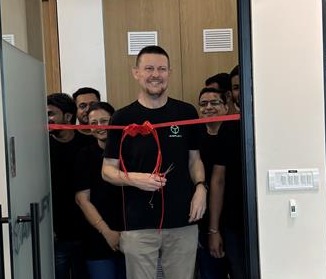
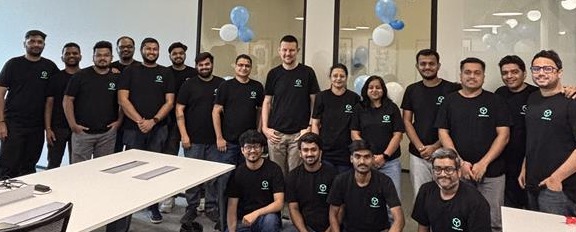
We’re excited to share that Amplify has officially opened a new office in Mumbai, India, marking another milestone in our global growth story.

The new office serves as a key hub for our engineering, DevOps, QA, and delivery management teams, strengthening our capacity to support innovation and deliver measurable value for customers around the world.

The ribbon-cutting ceremony took place on Monday, 3 October, led by Craig Biggs, Amplify’s Head of Engineering, who travelled from Australia to celebrate with the team.

“India is a key part of Amplify’s growth strategy,” said Prashant Chandra, CEO. “This new office reflects the scale of our growth and the increasing demand for solutions that help organizations execute strategy with clarity and confidence. We’re continuing to expand our global footprint so we can innovate faster, collaborate across regions, and support our customers wherever they are in the world.”

“Our Mumbai team is central to Amplify’s innovation and product evolution,”. “This new office gives us the foundation to continue building a high-performing engineering culture that supports customers globally,” said Craig Biggs, Head of Engineering.

With offices in Adelaide, London, Austin, Los Angeles, San Francisco, Toronto and Mumbai, Amplify continues to grow its international presence and empower organizations worldwide to connect strategy with execution and achieve transformation success.‍

Amplify-Now Opens New Office in Mumbai, India

Transformation ROI: Speaking the CFO’s Language

When ROI Becomes the Common Language

For CFOs, value isn’t a feeling – it’s a number.

Transformation leaders often talk in terms of milestones, outputs, and change outcomes. CFOs, meanwhile, speak the language of returns, risk, and capital efficiency. When these two worlds don’t connect, transformations become stories of activity instead of measurable impact.

At Amplify, we see this gap every day. Most organizations don’t have a consistent way to translate transformation performance into financial terms that boards and investors trust. As a result, even successful programs struggle to prove they’ve delivered true ROI.

It’s time to fix that.


Where Transformations Lose the CFO


The average transformation generates hundreds of metrics – from delivery milestones and project statuses to engagement scores and cost savings forecasts. But without a unified financial lens, those metrics rarely roll up to the one question that matters most:

“Are we creating value faster than we’re spending it?”

That’s the CFO’s perspective.

Without credible, real-time ROI visibility, CFOs are often left relying on anecdotal updates or backward-looking business cases. Bain research shows that companies that track transformation performance systematically are 2.5x more likely to outperform peers on total shareholder return – but few organizations can show this linkage clearly.

Why CFOs Need ROI They Can Trust

CFOs don’t want to micromanage transformation delivery. They want evidence. They want traceability from investment to outcome – confidence that every dollar spent moves the enterprise closer to its strategic goals.

In practice, this means:

  • Standardized value frameworks that define what “benefit” really means across the
    business.
  • Connected financial and transformation data – linking initiative performance directly
    to P&L and balance sheet outcomes.
  • Governance mechanisms that surface risks and reforecast benefits as assumptions
    change.

When these pieces come together, ROI stops being a post-hoc justification and becomes a live performance signal – one the CFO can trust.

The Amplify Difference: Translating Strategy into Financial Outcomes

Amplify was built to close this communication gap between transformation teams and the Office of the CFO.

Our platform translates strategy execution data into the financial language that boards, investors, and auditors understand. Every initiative, benefit, and dependency is quantified and traceable – turning qualitative progress into measurable, auditable outcomes.

With Amplify, CFOs can:

  • See the ROI of transformation investments in real time
  • Reforecast benefits and risks across the portfolio
  • Tie performance directly to enterprise KPIs and capital efficiency
  • Replace anecdotal status reports with trusted financial insights

This is how finance regains confidence in transformation – not through more reports, but through measurable truth.

Bridging Finance and Transformation

When CFOs and transformation leaders operate from a single version of truth, they move from tension to alignment.

  • The CFO gains visibility and control.
  • Transformation leaders gain credibility and advocacy.
  • The enterprise gains momentum and measurable value.

‍Transformation ROI isn’t just about proving success. It’s about sustaining investment confidence – giving leaders the proof they need to double down on what’s working and pivot quickly when it’s not.

Because when CFOs can see the value clearly, transformation stops being a cost and starts being an engine for growth.

Turn transformation from a cost into an engine for growth. See how Amplify connects strategy, execution, and outcomes – giving CFOs and boards ROI they can trust. Request a demo today!