
Strategic Portfolio Management
Run every program to achieve the value it’s committed to.
Strategic portfolio management is how enterprises decide which programs to fund, track whether they are delivering value, and move capital and people when the programs are not. Amplify is the strategic portfolio management platform that helps you run all your programs and show whether they’re delivering the value you committed to, with benefits tracked alongside delivery rather than in a separate system.
Used to run transformation and program portfolios in manufacturing, utilities, pharma, mining, government and critical infrastructure.
Why value tracking still ends up in spreadsheets
Most enterprises already have a strategic portfolio management tool. It tracks projects, budgets and schedules. The benefits those projects were funded to deliver usually sit somewhere else, in Excel and PowerPoint, rebuilt by hand for every board pack.
Those tools are also heavy. When the organization changes how it runs programs, reconfiguring them means a purchase order for professional services, so the new process ends up in spreadsheets too.
Signs your portfolio has outgrown its current tools
- Benefits live in a separate file. The business case promised a number, and nobody tracks it once delivery starts.
- Reporting takes longer than deciding. Status updates are chased, copied and reformatted before anyone can act on them.
- Changing a process means a change request. New stage gates or reporting fields wait on the vendor’s professional services.
- Prioritization turns into a debate. Initiatives get ranked on who argues hardest rather than on cost, capacity and contribution to goals.
Amplify puts goals, initiatives, cost, resourcing and benefits in one place, and your team can reconfigure it as your processes change, without a services project.
Goals, funding, delivery and benefits in one platform
Amplify covers the full cycle, from setting goals to showing the value delivered.
Set direction
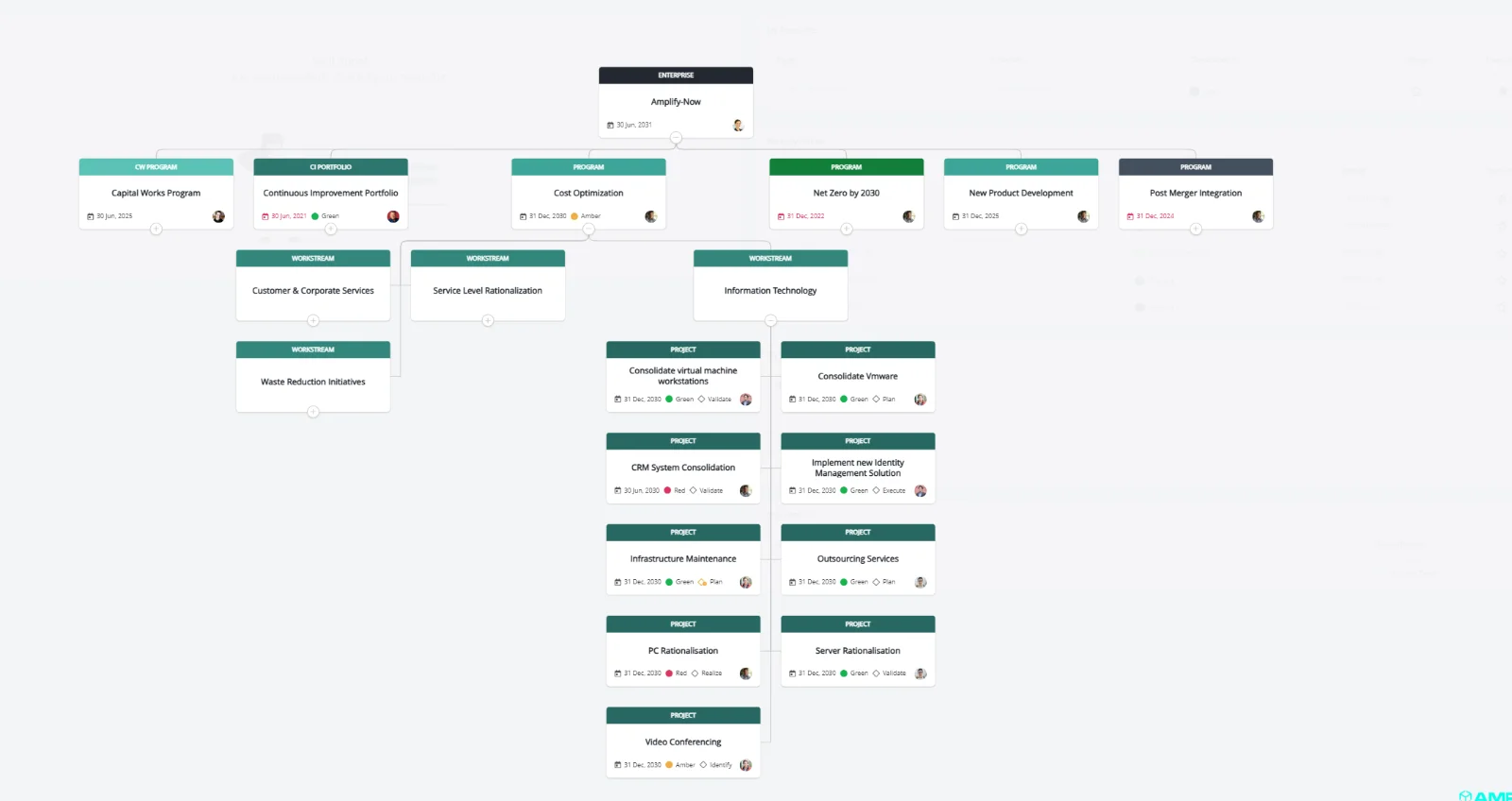
Cascade goals from strategy to every project
Set financial and non-financial goals at the top, then assign contribution targets down to programs, workstreams and projects. Costs, benefits and KPIs roll up automatically, so performance against goals is always current. The hierarchy has as many levels as you need and uses your own terminology.
Goal and KPI management · Top-down contribution targets · Automatic roll-up · Configurable hierarchy and terminology
Choose what to fund
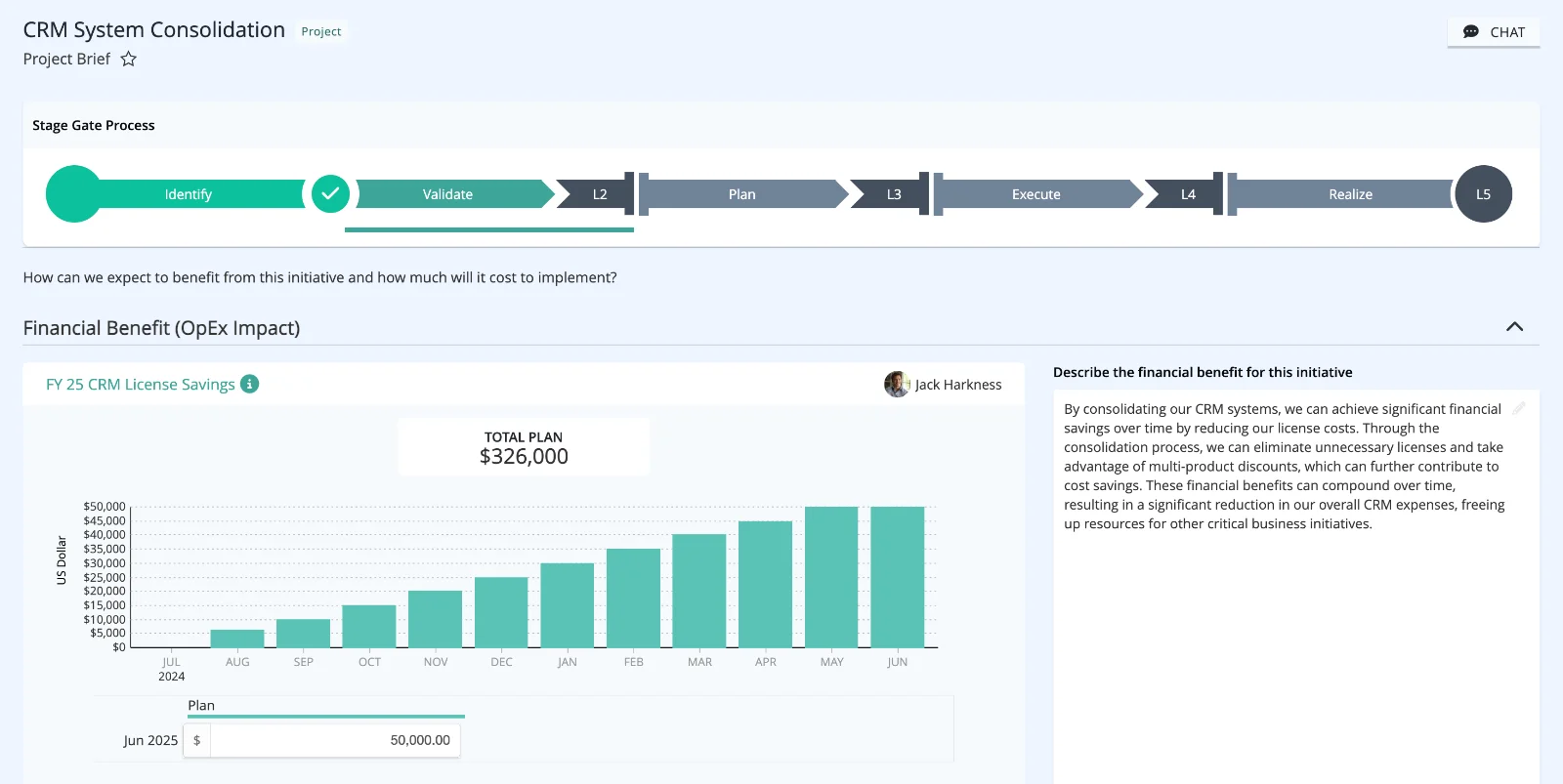
Compare scenarios before you commit budget
Rank initiatives on cost, resources, business impact and contribution to goals. Build several scenarios side by side and compare them before you commit budget. Configurable stage gates, with your own criteria, approvals and notifications, control what moves from idea to funded program.
Scenario planning · Initiative scoring · Stage-gate workflows · Business case templates
Deliver
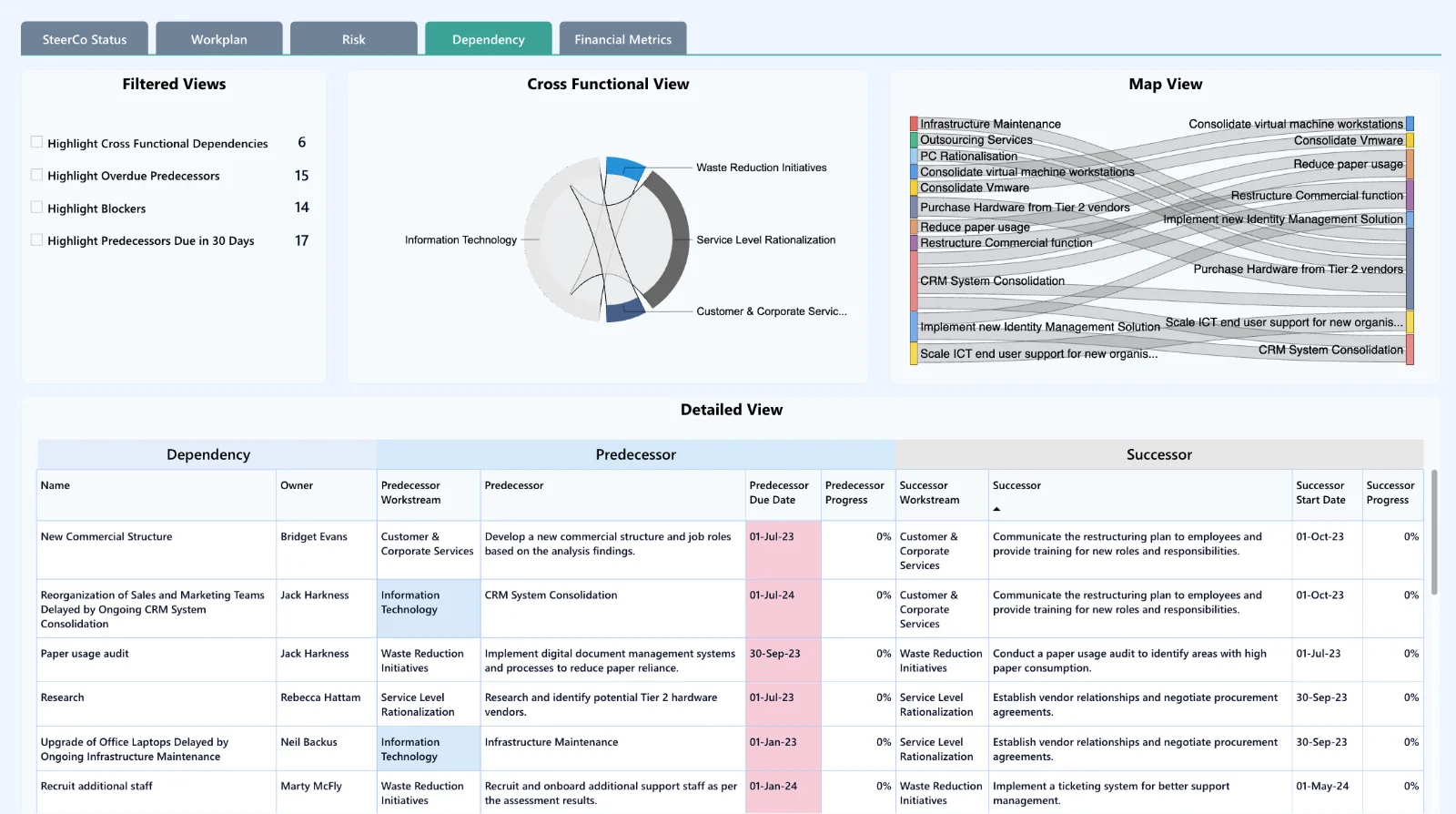
See capacity, dependencies and risk before they become delays
Set capacity by role type in FTE, days or hours, and Amplify adds up demand across every project so constraints show early. Program schedules roll up from the projects beneath them, with critical path, milestones and cross-functional dependencies. Risks, issues, actions, decisions and change requests roll up too, so leaders see what needs a decision.
Resource and capacity management · Schedules and critical path · Cross-functional dependencies · RAID and change requests
Prove value
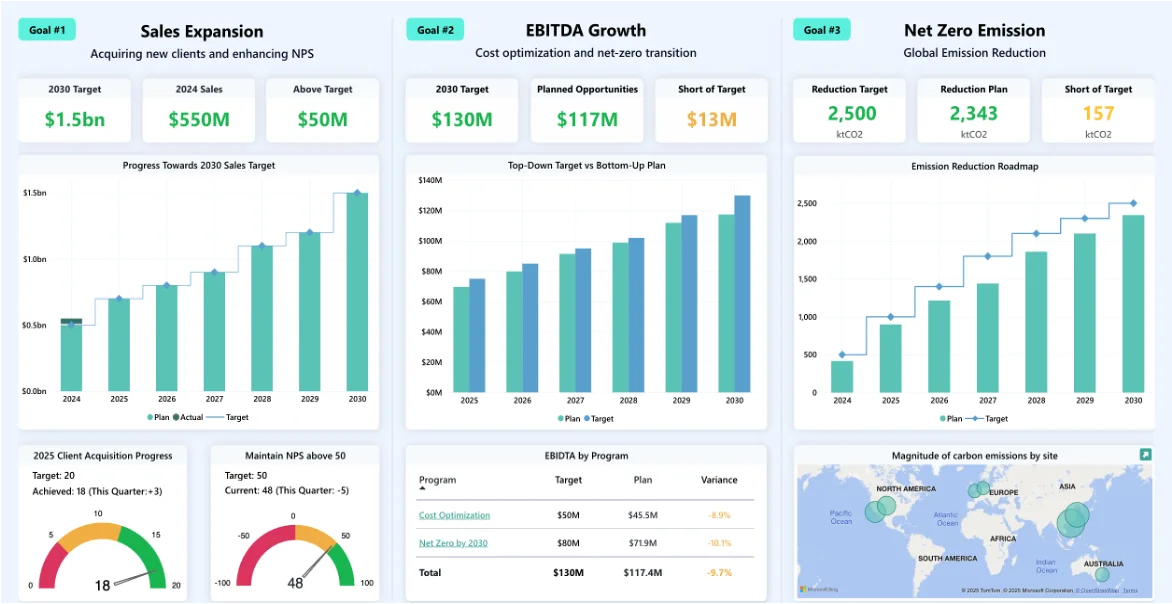
Track benefits alongside delivery
Track cost types such as CapEx and OpEx alongside financial and non-financial benefits, as plan, budget, forecast and actuals. When a schedule slips, Amplify shows the impact on benefit realization. Status reporting runs on your cadence, with reminders and approvals, and compares each period with the last.
Cost, benefit and KPI tracking · Schedule-to-benefit impact · Automated status reporting · Executive reporting (Amplify Advantage)
How Amplify approaches strategic portfolio management: it starts with programs
Most of a transformation office’s month goes into building the report rather than acting on it.
Most portfolio software grew up from projects: tasks, timesheets and IT delivery. Portfolios get the dashboards and projects get the Gantt charts. The program in between, the layer that delivers the business outcome, is the one that gets left out.
Amplify starts there. Every program carries its own goals, benefits and KPIs, and every project beneath it is measured against its contribution. You can see whether you are on schedule, and whether the work is delivering the value you funded it for.
Value in the workflow
Benefits are tracked as part of delivery and are ready for the board when it asks.
Any kind of program
Cost programs, integrations and separations, finance transformation, new product development, continuous improvement and procurement, on one platform.
Yours to shape
Workflows, stage gates and reporting are configured to how you run, so it becomes a system you make your own.
AI for strategic portfolio management, where your teams already work
Amplify’s AI assistant works on your live portfolio data. Ask about any program and it answers from the goals, benefits, status and documents already in Amplify, showing each person only what they have permission to see. It also guides owners through creating initiatives and gives quick status updates.
Two AI agents are live today: Crystal, the Transformation Coach, and Anthony, the Data Analyst.
Works in the AI tools you already use
Amplify also works with the AI tools your people already use. Through the Model Context Protocol (MCP), teams can ask Claude, ChatGPT or Microsoft Copilot about their programs and update them, with answers and changes going straight to Amplify.
Our approach to AI is practical and secure, and focused on execution and measurable value.
Who uses strategic portfolio management software
Transformation office and enterprise PMO
Run the portfolio, not the reporting cycle
Standardize stage gates, templates and status cadences across every program. See the whole portfolio in one place and step in where it’s at risk.
CFO, COO and finance
See what the investment is returning
Track cost, benefits and KPIs as plan, budget, forecast and actuals, with numbers finance can audit.
Executive sponsors and the board
Know which programs are delivering
See progress against strategic goals and the variances that need a decision, without waiting for the monthly pack.
Program and initiative owners
Spend more time delivering
Update once and it rolls up automatically. Owners of tasks, risks and milestones are clear, and so is each project’s contribution.
Strategic portfolio programs run on Amplify
$200M + $700M
Cost and revenue synergies realized. Global financial services organization.
1,000+
Initiatives across 50 teams, delivering $350M in annual savings against a $300M goal. Global renewable energy technology company.
40+ sites
Initiatives coordinated across 33 countries. Global pharmaceutical company.
$450M
In benefits documented from a citywide SAP program. Major city government.
Vinarchy
A global wine company, Vinarchy tracks the synergies of its post-merger integration program in Amplify, across production, people, commercial and finance.
AGL
One of Australia’s largest energy companies, AGL runs strategic portfolio governance for its retail business in Amplify, with visibility of what’s funded, what isn’t, and which benefits are real.
How Amplify compares to Planview and ServiceNow SPM
All three are used for strategic portfolio management, and each was built for a different job. If you are weighing Amplify as a Planview alternative or a ServiceNow SPM alternative, this is where they differ.
| Amplify | Planview | ServiceNow SPM | |
|---|---|---|---|
| Built for | Transformation and change programs, business-led | Portfolio management across IT, finance, PMO and R&D | Part of the ServiceNow platform |
| Portfolio prioritization | Scoring on cost, resources, business impact and goal contribution, with side-by-side scenarios | Investment ranking by business driver, with real-time scenario planning | Ranks projects against objectives, resourcing and risk |
| Value and benefits tracking | Tracked alongside delivery, down to each project’s contribution | Investment-to-outcome tracking alongside financial planning | Outcomes framed around IT investments |
| Resource and capacity planning | Capacity by role type, with demand aggregated across projects | Capacity planning tied to portfolios and agile teams | Demand and resource management within the ServiceNow platform |
| AI | Built-in assistant and AI agents on live portfolio data, with answers and updates available in Claude, ChatGPT or Microsoft Copilot through MCP | Planview Anvi conversational AI and automated insights | AI agents and AI-driven roadmaps within the ServiceNow platform |
| Where it’s strongest | Showing whether transformation and change programs deliver their committed value | Breadth of modules. Gartner SPM Magic Quadrant Leader, 2026 | Organizations already running ServiceNow for IT |
When another platform may suit you better
If your main need is IT project delivery with detailed timesheets and time reporting, a project-first PPM platform may fit better. If your priority is showing whether your programs deliver the value they were funded for, that is what Amplify was built for.
Try it on your own portfolio
Start a trial and set up one of your programs in Amplify.
Keep your delivery systems. Add the portfolio layer above them.
If you already run ServiceNow
If you already run ServiceNow for IT service management, you keep it. Amplify runs the transformation and portfolio layer above it, so the programs moving through your existing systems are judged on whether they delivered the value they were funded for.
Amplify customers already run ServiceNow for IT service management alongside Amplify for this layer.
Integrations
Amplify connects to systems your teams already use, including ServiceNow, Jira, Microsoft Project, SAP, Snowflake and Qlik. Data comes in through Excel upload, or through API connectors on Amplify Advantage, the enterprise license option, so you can start with the spreadsheets you have today.
How to get strategic portfolio management running
1. Configure
We set up your hierarchy, terminology, stage gates and reporting cadences to match how you run today.
2. Connect
Bring in your current portfolio from spreadsheets, or connect the tools your teams already use.
3. Go live
Program and initiative owners start updating in Amplify, and the roll-up to leadership happens automatically from day one.
Most customers are live within 4 to 8 weeks.
What stays the same
- Your delivery and ITSM systems, including ServiceNow.
- Your hierarchy, terminology and governance.
- Your current portfolio data, loaded from Excel as it is.
Enterprise security, with your data kept separate
- Hosted on Microsoft Azure, using global data centers across Amplify’s operating regions.
- A dedicated instance for every customer, with its own private network, application container and separate Azure SQL database.
- Azure firewalls at critical points in the data flow, configured for each customer.
- Single sign-on for secure access.
- ISO/IEC 27001:2022 certified.
Frequently asked questions
What is strategic portfolio management?
Strategic portfolio management (SPM) is how an enterprise decides which programs and projects to fund, tracks whether they are delivering the intended value, and moves money and people when they are not. Leaders manage the whole portfolio against the goals it is meant to achieve, rather than managing projects one at a time.
What is the difference between SPM and PPM?
Project portfolio management (PPM) focuses on delivering projects well: schedules, resources, budgets and status. Strategic portfolio management asks whether the portfolio is the right set of investments, and whether it is delivering the outcomes the strategy needs.
What is the difference between transformation management and strategic portfolio management?
Transformation management is running the programs that change the business and showing whether they deliver the value committed to. Strategic portfolio management is the wider discipline: deciding what to fund across the portfolio, and proving what it delivered. Amplify is an independent transformation management platform, and enterprises use it for both.
What should you look for in SPM software?
Look beyond project tracking. Check that benefits and value are tracked alongside delivery, that prioritization weighs cost, capacity and contribution to goals, and that the platform fits your governance and terminology without a long implementation.
Is Amplify on Gartner’s Magic Quadrant for Strategic Portfolio Management?
No, not yet. Gartner’s Magic Quadrant for Strategic Portfolio Management is one way enterprises shortlist vendors, and Amplify isn’t on it today. We’re open to analyst evaluation. If an analyst listing is a hard requirement for your evaluation, Amplify won’t meet it right now. If it isn’t, the comparison above is a fairer test.
Does Amplify replace our PPM or ITSM system?
Usually not. Amplify is designed to sit above your existing delivery and ITSM systems, and connects to ServiceNow, Jira, Microsoft Project and SAP among others. It shows whether the work moving through them is delivering value.
Does Amplify use AI?
Yes. Amplify’s AI assistant answers questions about your programs from the live data in Amplify, respecting each user’s permissions, and helps owners create initiatives. Two AI agents are live: Crystal, the Transformation Coach, and Anthony, the Data Analyst. Through MCP, teams can also ask about and update their programs from Claude, ChatGPT or Microsoft Copilot.
How long does it take to implement Amplify?
Most customers are live within 4 to 8 weeks. Amplify is configured to your existing hierarchy, terminology and governance, and your current portfolio can be loaded straight from spreadsheets.
Who uses strategic portfolio management software?
The transformation office or enterprise PMO usually owns it. Finance uses it to validate costs and benefits. Executive sponsors and the board use it to see which programs are delivering. Program and initiative owners keep it current, and their updates roll up to everyone else automatically.
Find out what your portfolio is really delivering
See how transformation offices and PMOs use Amplify to fund the right programs and track the value they deliver.